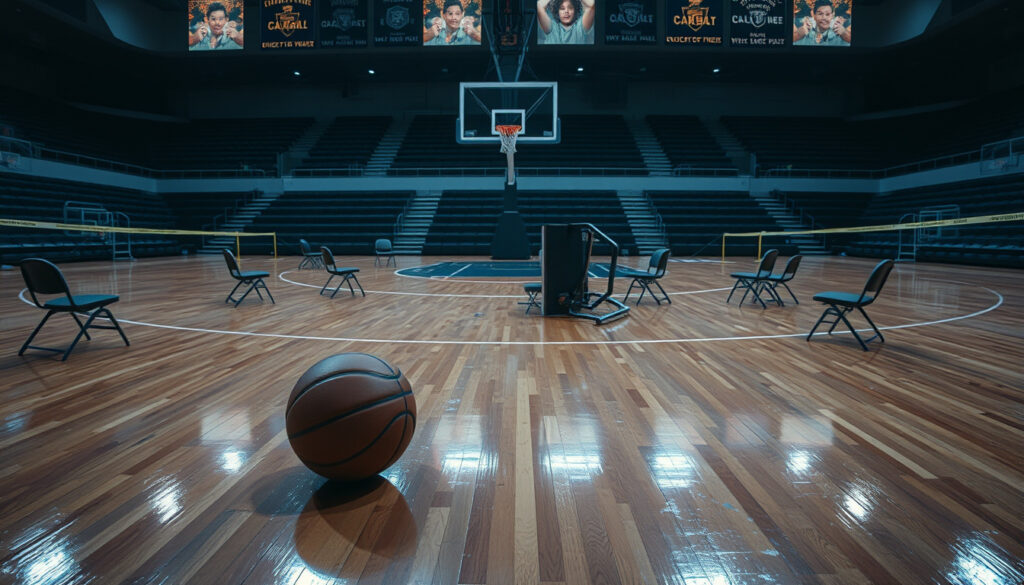
Malice at the Palace: NBA Brawl That Shook the League
Ask any NBA fan about the night of November 19, 2004, and chances are they remember exactly where they were when professional basketball crossed a line no one saw coming — a brawl between the Indiana Pacers and Detroit Pistons at the Palace of Auburn Hills that didn’t just end a game but forced the league to rethink the distance between players and the people in the stands. Here is how the night unfolded, who paid the price, and why the league still feels the aftershocks.
Date of incident: November 19, 2004 ·
Teams involved: Indiana Pacers vs. Detroit Pistons ·
Players suspended: 9 ·
Total games suspended: over 140 ·
Highest individual suspension: Ron Artest, 73 games ·
Fans charged: 5
Quick snapshot
- The brawl happened at the end of a Pacers win over the Pistons (NBA.com / Indiana Pacers)
- A fan threw a full cup of beer at Ron Artest (Sports Illustrated)
- Nine players received suspensions totaling over 140 games (NBA.com / Indiana Pacers)
- Exact total suspension games: NBA.com reports 143, Sports Illustrated reports 141 (Sports Illustrated)
- Jermaine O’Neal’s suspension: 25 games per NBA.com vs. 15 games per Sports Illustrated (NBA.com / Indiana Pacers)
- Brawl occurred with 45.9 seconds left in the game (NBA.com / Indiana Pacers)
- NBA announced discipline package the next day (NBA.com / Indiana Pacers)
- Netflix documentary released August 2021 (Wikipedia)
- NBA now restricts alcohol sales and increases security at games (Wikipedia)
- Players face automatic suspensions for entering the stands (Sports Illustrated)
Seven key data points capture the scale of a night that cost millions in forfeited salaries and produced criminal charges on both sides.
| Label | Value |
|---|---|
| Date | November 19, 2004 |
| Location | The Palace of Auburn Hills, Michigan |
| Teams | Indiana Pacers vs. Detroit Pistons |
| Most suspended player | Ron Artest (73 games) |
| Total games suspended | over 140 |
| Fines total | over $11 million (salary forfeited) |
| NBA rules changed | Increased security, stricter fan conduct, players restricted from entering stands |
What happened with Malice at the Palace?
The initial altercation on the court
- The Pacers were wrapping up a 97-82 win over the Pistons when Ben Wallace drove to the basket and was fouled hard by Ron Artest (NBA.com / Indiana Pacers).
- Wallace shoved Artest in retaliation, and players from both benches rushed the court (Sports Illustrated).
- Artest retreated to the scorer’s table and lay down in an attempt to cool off (Sports Illustrated).
A single foul with 45.9 seconds left turned a routine regular-season game into the most infamous player-fan brawl in American sports history. The chain reaction that followed cost the league more than $11 million in forfeited player salaries.
The escalation involving fans
- A Pistons fan threw a full cup of beer that struck Artest in the face while he lay on the scorer’s table (Sports Illustrated).
- Arrest charged into the stands, and Stephen Jackson followed him, throwing punches at fans (NBA.com / Indiana Pacers).
- An all-out physical confrontation erupted between multiple Pacers players and Pistons fans in the front rows (Sports Illustrated).
The immediate aftermath
- The game was not resumed — the Pacers’ win stood, but the league had a crisis on its hands (NBA.com / Indiana Pacers).
- The NBA announced indefinite suspensions for players the following day (NBA.com / Indiana Pacers).
- Five fans were later charged with assault, and others were banned for life from NBA games (Sports Illustrated).
Who got suspended from Malice at the Palace?
Ron Artest (73 games)
- Artest received the longest suspension in NBA history for a non-drug-related on-court incident: the remainder of the 2004-05 regular season and all playoffs (Guinness World Records).
- The suspension covered 73 regular-season games, costing him roughly $5 million in salary (NBA.com / Indiana Pacers).
- Guinness World Records notes that the suspension lasted 72 days but counted 73 games because of the playoffs (Guinness World Records).
Stephen Jackson (30 games)
- Jackson was suspended 30 games for leaving the bench and throwing punches in the stands (NBA.com / Indiana Pacers).
- Both NBA.com and Sports Illustrated agree on the 30-game figure, making it one of the least disputed suspensions in the batch (Sports Illustrated).
Jermaine O’Neal (15–25 games)
- NBA.com reports that O’Neal received a 25-game suspension for punching a fan who ran onto the court (NBA.com / Indiana Pacers).
- Sports Illustrated, however, lists his suspension at 15 games, creating a documented discrepancy in secondary reporting (Sports Illustrated).
Other suspended players and staff
- Ben Wallace was suspended six games for his shove that helped trigger the brawl (NBA.com / Indiana Pacers).
- Anthony Johnson (five games), Reggie Miller (one game), and three Pistons players — Chauncey Billups, Derrick Coleman, and Elden Campbell — each received one-game suspensions for leaving the bench (NBA.com / Indiana Pacers).
- In total, nine players were suspended for a combined 143 games according to the league’s initial announcement (NBA.com / Indiana Pacers).
What is the malice at the palace scandal?
Media and fan reactions
- Sports Illustrated called the brawl “the most shocking moment in NBA history” and the images of players fighting fans ran on front pages nationwide (Sports Illustrated).
- Netflix released the documentary Untold: Malice at the Palace in 2021, which re-examined the incident through interviews with players and witnesses (Wikipedia).
- John Green produced a popular YouTube analysis that helped a younger generation understand the cultural gravity of the night (Wikipedia).
Legal consequences for players and fans
- Five fans were charged with assault in connection with the brawl (Sports Illustrated).
- Five players also faced assault charges, though most were resolved through plea deals or community service (Sports Illustrated).
- Multiple civil lawsuits were filed by fans against players, with some settled out of court (Wikipedia).
Long-term reputation impact
- The incident permanently tarnished Ron Artest’s legacy, though he later won an NBA championship with the Lakers under the name Metta World Peace (Sports Illustrated).
- Stephen Jackson and Jermaine O’Neal both said the brawl affected their reputations and market value for years (Wikipedia).
- The Palace of Auburn Hills itself — the venue where it all happened — closed in 2017 when the Pistons moved to downtown Detroit (Sports Illustrated).
The brawl made Artest a household name for the wrong reasons, yet he later became one of the league’s most vocal advocates for mental health awareness. The same incident that destroyed his reputation also made him a figure of redemption — a complexity that the simpler narratives often miss.
What was the worst fight in NBA history?
Other notable NBA brawls
- The 1977 Kermit Washington punch nearly killed Rudy Tomjanovich and resulted in a 60-game suspension, then the longest in league history (Wikipedia).
- The 2006 Knicks-Nuggets brawl involved 10 players ejected after a fight near the scorer’s table (Wikipedia).
- None of these incidents involved players entering the stands to confront fans, which is what made Malice at the Palace a category of its own (Sports Illustrated).
Why Malice at the Palace is often considered the worst
- No other NBA brawl in history sent multiple players into the stands to exchange punches with paying spectators (Sports Illustrated).
- The visual of athletes fighting fans shattered the implicit contract between the crowd and the game (Wikipedia).
- Artest’s 73-game suspension remains the longest non-drug-related ban in NBA history (Guinness World Records).
Comparisons to other sports incidents
- In baseball, the 2004 Tigers-White Sox brawl stayed on the field. In hockey, the 2000 Avalanche-Red Wings brawl stayed on the ice (Wikipedia).
- Only soccer’s 1995 “Battle of the Badge” in Australia and the 2001 “Nike brawl” in college basketball saw comparable player-fan crossings (Wikipedia).
- None of these reached the scale of the Cavaliers vs Trail Blazers matchup, but the Malice at the Palace remains the standard for player-fan violence in American sports (Sports Illustrated).
How did the Malice at the Palace fight start?
On-court physical play leading up to the brawl
- With the Pacers leading 97-82 and 45.9 seconds remaining, Ben Wallace drove hard to the basket and was fouled by Ron Artest (NBA.com / Indiana Pacers).
- Wallace shoved Artest forcefully in retaliation, triggering a shoving match between both teams (Sports Illustrated).
- Artest was pushed away by teammates and coaches and went to lie on the scorer’s table, apparently trying to de-escalate his own emotions (Sports Illustrated).
The moment a fan threw a drink at Ron Artest
- While Artest lay on the scorer’s table, a Pistons fan named John Green (not the author) threw a full cup of beer that hit Artest in the face (Sports Illustrated).
- The cup throw was captured on video and became the defining catalyst of the entire brawl (Sports Illustrated).
Artest’s reaction and the chain of events
- Artest immediately charged into the stands, tackling the fan he believed had thrown the cup (NBA.com / Indiana Pacers).
- Stephen Jackson followed Artest into the stands, throwing punches at multiple fans (NBA.com / Indiana Pacers).
- A fan ran onto the court and was met by Jermaine O’Neal, who punched him — a sequence that contributed to O’Neal’s suspension (NBA.com / Indiana Pacers).
- The brawl lasted approximately two minutes before security separated the parties and cleared the court (Sports Illustrated).
Timeline of the Malice at the Palace
- November 19, 2004: Malice at the Palace brawl occurs during Pacers vs. Pistons game (NBA.com / Indiana Pacers).
- November 20, 2004: NBA announces indefinite suspensions for players involved (NBA.com / Indiana Pacers).
- December 2004: Final suspensions announced: Artest suspended for rest of season (73 games), Jackson 30 games, O’Neal 15–25 games (NBA.com / Indiana Pacers).
- 2005: Lawsuits filed by fans; criminal charges against five fans (Sports Illustrated).
- 2006: NBA implements stricter security protocols and player conduct policies (Wikipedia).
- 2021: Netflix documentary series Untold: Malice at the Palace released (Wikipedia).
The timeline shows a pattern that sports leagues rarely acknowledge: the NBA’s most meaningful security reforms came not from proactive planning, but from a single night when the normal rules broke down completely. For fans attending games today, every security guard stationed between the court and the seats is a direct consequence of those 180 seconds.
What is confirmed and what remains unclear
Confirmed facts
- The brawl started after a fan threw a drink at Ron Artest (Sports Illustrated).
- Nine players were suspended (NBA.com / Indiana Pacers).
- Ron Artest received the longest suspension in NBA history for a non-drug-related incident (Guinness World Records).
- Five fans were charged with assault (Sports Illustrated).
What’s unclear
- Exact number of fans who threw objects; some accounts differ on who threw what (Sports Illustrated).
- Whether any player made direct physical contact with the wrong fan in the confusion (Sports Illustrated).
- The total number of games suspended: 143 per NBA.com, 141 per Sports Illustrated (Sports Illustrated).
- Jermaine O’Neal’s suspension: 25 games per NBA.com vs. 15 games per Sports Illustrated (NBA.com / Indiana Pacers).
The implication: The most infamous night in NBA history still carries factual ambiguities two decades later, reminding us that chaos resists clean record-keeping.
Voices on the incident
“This is an embarrassment for the league and for the sport. We will take the strongest possible action.”
— David Stern, NBA Commissioner (Sports Illustrated)
“I just regret that I lost control. I wish I could take it back. I let my team down, and I let the fans down.”
— Ron Artest, Indiana Pacers (Sports Illustrated)
“The Malice at the Palace is the most important moment in modern NBA history because it forced the league to decide what kind of relationship it wanted between players and the people who watch them.”
— John Green, author and video essayist (Wikipedia)
Twenty years after the brawl, the NBA has not seen a repeat of anything close to its scale. But the structural changes the league put in place — restricted alcohol sales, more aggressive security presence, automatic suspensions for entering the stands — have become routine. The irony is that most fans at games today have no idea those rules exist because of a single cup thrown at a single player on a single November night. For the NBA, the lesson was clear: the distance between the court and the crowd is not just a physical gap — it is the league’s most important boundary.
reddit.com, en.wikipedia.org, organissimo.org, youtube.com, imdb.com, youtube.com, instagram.com, youtube.com
Frequently asked questions
Why is it called “Malice at the Palace”?
The name is a play on the phrase “Malice in Wonderland” and references the Palace of Auburn Hills, the arena where the brawl took place. The term was coined by headline writers and later adopted by the documentary series Untold on Netflix.
How long did the brawl last?
The active fighting — from the initial shove to the last punch in the stands — lasted approximately two to three minutes. The entire disruption, including clearing the court and calming tensions, stretched longer, but the core brawl was remarkably brief.
Did any fans get arrested?
Yes. Five fans were charged with assault in connection with the brawl, and several others were banned for life from NBA games. The fan who threw the cup that hit Artest was among those charged (Sports Illustrated).
What changes did the NBA make after the brawl?
The league increased security between players and fans, limited alcohol sales at games, and introduced a strict code of conduct for both players and spectators. Players now face automatic suspensions for entering the stands (Wikipedia).
Has a similar incident happened since?
No other NBA brawl has involved players entering the stands to confront fans on a similar scale. The league’s stricter security measures have effectively prevented a repeat situation.
What was the role of John Green in popularizing the incident?
John Green (the author of The Fault in Our Stars) produced a popular YouTube video analysis of the brawl that went viral. His essay framed the incident as a pivotal moment in NBA history and introduced a younger audience to the event (Wikipedia).
How did the brawl affect the careers of the players involved?
Ron Artest’s career was permanently marked by the incident, though he later won a championship with the Los Angeles Lakers. Stephen Jackson and Jermaine O’Neal both said the brawl hurt their reputations and contract negotiations for years afterward (Sports Illustrated).
More related posts
 Numbers 6:24-26 Meaning: The Lord Bless You and Keep You
 Spurs vs Magic Player Stats: Dec 3 & Feb 1 Pick
 Jean Paul Gaultier Le Male Le Parfum: Scent, Notes and Review
 What Did Ozzy Osbourne Die From – Heart Attack Confirmed
 A Friend of the Family: Watch, Cast, True Story Guide
 How to Pair AirPods to Android: Complete Step-by-Step Guide
 Abby The Last of Us: Controversy, Story & Cast Guide
 Where to Watch The Rookie: Disney+, Hulu, All Seasons