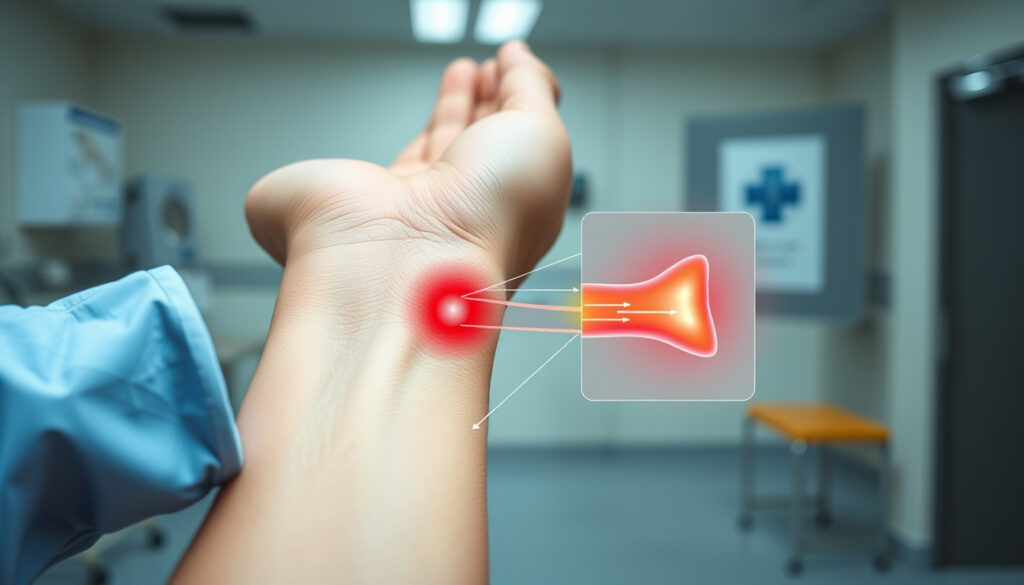
De Quervain’s Tenosynovitis: Causes, Treatment, Recovery
If you’ve ever felt a sharp, catching pain at the base of your thumb when twisting a jar or picking up a child, you’re not alone. That’s the hallmark of de Quervain’s tenosynovitis, a condition where the tendons on the thumb side of the wrist become irritated and swollen. According to Mayo Clinic (leading U.S. medical center), starting treatment early can lead to symptom improvement within four to six weeks.
Prevalence among adults: 1 in 1000 ·
Peak age of onset: 30-50 years ·
Ratio women to men affected: 6:1 ·
Tendons involved: abductor pollicis longus and extensor pollicis brevis ·
Common treatment splint duration: 4-6 weeks ·
Surgical success rate: >90%
Quick snapshot
- Painful tendon condition at base of thumb
- Caused by irritation of tendons in a tight tunnel
- Also called mother’s wrist or washerwoman’s sprain
- Repetitive gripping, pinching, and twisting
- Hormonal changes in pregnancy and postpartum
- Direct injury to thumb side of wrist
- Thumb spica brace worn 4-6 weeks
- Ice and anti-inflammatory medications
- Corticosteroid injection into the tendon sheath
- Surgical release if conservative care fails
- Non-surgical: 4-8 weeks for symptom improvement
- After injection: relief within days to weeks
- After surgery: return to normal activities in 4-6 weeks
Six key facts at a glance, one pattern: the condition is highly treatable when caught early, but delaying care can turn irritation into chronic tendon thickening.
| Fact | Details |
|---|---|
| Medical term | De Quervain’s tenosynovitis |
| Affected body part | First dorsal compartment of the wrist |
| Primary symptom | Pain at base of thumb when moving wrist or grasping |
| Most common test | Finkelstein test (90% sensitivity) |
| First-line treatment | Thumb spica brace and activity modification |
| Surgery rate | About 15-20% of patients after failed conservative care |
What is de Quervain’s tenosynovitis?
Which tendons are involved?
- The condition affects the tendon sheath on the thumb side of the wrist, according to Leicestershire Partnership NHS Trust (UK public health service).
- It involves the abductor pollicis longus and extensor pollicis brevis tendons as they run through a tight tunnel called the first dorsal compartment.
- The rubbing of these two tendons within the tunnel causes irritation and swelling, per North Tees and Hartlepool NHS Foundation Trust (UK hospital trust).
Who is most at risk for de Quervain’s tenosynovitis?
- Peak incidence occurs in women aged 30–50, and the condition is six times more common in women than men.
- Pregnancy is a well-documented risk factor; Mayo Clinic notes that pregnancy-associated symptoms often improve after delivery.
- New parents and caregivers who repeatedly lift infants are especially prone.
If you’re a new parent in your 30s or 40s and feel thumb pain when lifting your baby, you’re in the highest-risk group. Early rest and bracing can prevent a simple irritation from becoming a chronic tendon problem.
The pattern: the anatomical tunnel is the key to understanding why early intervention works — it keeps the sheath from scarring down.
What triggers de Quervain’s tenosynovitis?
Can repetitive hand movements cause it?
- Yes. East Sussex Healthcare NHS Trust (UK hospital trust) describes the condition as irritation of the thumb tendons often brought on by repetitive gripping, pinching, or twisting.
- Common culprits: heavy typing, texting, using scissors, knitting, and playing certain musical instruments.
Is pregnancy a risk factor?
- Hormonal changes and fluid retention during pregnancy can swell the tendon sheath, narrowing the already tight tunnel.
- This explains why the condition is often called “mother’s wrist” and why it frequently appears in the third trimester or postpartum period.
The pattern: any activity that repeatedly moves the thumb away from the hand while applying force can inflame the tendons. For pregnant women, the biological changes compound the mechanical strain.
How is de Quervain’s tenosynovitis diagnosed?
What is the Finkelstein test?
- The Finkelstein test is the standard diagnostic maneuver: make a fist with your thumb tucked inside your fingers, then bend your wrist downward.
- A sharp pain on the thumb side of the wrist suggests de Quervain’s. The test is reported to have about 90% sensitivity.
Can ultrasound or X-ray confirm it?
- Ultrasound can reveal a thickened tendon sheath and fluid around the tendons, helping confirm the diagnosis. Orthobullets (orthopedic education resource) notes that imaging is especially helpful when the Finkelstein test is inconclusive.
- X-rays are typically normal in de Quervain’s but are ordered to rule out arthritis or fractures.
What this means: the Finkelstein test is fast and reliable for most cases, but ultrasound adds certainty when the presentation is atypical.
What is the fastest way to cure de Quervain’s tenosynovitis?
Non-surgical first-line treatments
- A 2023 systematic review in JAMA Network Open (peer-reviewed medical journal) concluded that a corticosteroid injection plus thumb spica immobilization for 3–4 weeks should be first-line treatment.
- Thumb spica braces hold the thumb and wrist in a neutral position, reducing friction. StatPearls (clinical reference) reports that most patients are treated successfully without surgery.
- Icing, NSAIDs like ibuprofen (learn safe dosing here), and activity modification support recovery.
How long does it take for de Quervain’s tenosynovitis to heal?
- Early treatment: symptoms improve within 4–6 weeks, per Mayo Clinic.
- Cleveland Clinic (U.S. hospital system) says recovery usually takes a few weeks after diagnosis and treatment.
- With conservative care alone (brace + activity change), 60–80% of patients improve within 4–8 weeks.
When is surgery considered?
- Surgery is reserved for the 15–20% of patients who do not respond to conservative measures after 8–12 weeks.
- The procedure involves releasing the first dorsal compartment to give the tendons more room. Orthobullets reports a success rate above 90% for surgical release.
- After surgery, Alberta Health Services (Canadian provincial health authority) states it may take 6 to 12 weeks for complete hand healing.
The fastest path to relief isn’t surgery — it’s acting early. That means seeing a doctor at the first sign of thumb pain and committing to a brace and injection plan. Every week of delay risks making the tendon sheath thicker and harder to treat.
The implication: if symptoms haven’t improved after a few weeks of bracing, the window for simple conservative care is closing.
What happens if de Quervain’s tenosynovitis is left untreated?
Can it lead to permanent thumb stiffness?
- Yes. Chronic inflammation can cause the tendon sheath to thicken irreversibly, leading to persistent pain and limited thumb motion.
- The condition is called “stenosing tenosynovitis” because the sheath actually narrows — a progressive tightening that can make simple tasks like buttoning a shirt impossible without pain.
What is a red flag for de Quervain’s tenosynovitis?
- Seek urgent care if you experience: acute severe pain that doesn’t ease with rest, inability to move the thumb, signs of infection (redness, warmth, fever), or if the pain spreads up the forearm.
The trade-off: letting the condition ride out untreated may seem harmless, but the window for simple conservative care closes as the tendon sheath scars down.
Does de Quervain’s tenosynovitis ever go away?
Can it resolve on its own?
- Mild cases can improve without treatment, but RACGP (Australian general practice college) emphasizes that most people need some form of management.
- Without intervention, symptoms often persist or worsen over months.
What is the typical recovery timeline?
- Non-surgical: 4–6 weeks for noticeable improvement, 6–8 weeks for full symptom resolution in many cases.
- After corticosteroid injection: many feel relief within days, but full benefit may take 2–3 weeks.
- Post-surgery: light activities in 2–4 weeks, return to daily life at 4–6 weeks, complete healing at 8–12 weeks per Alberta Health Services.
For parents and active adults, the timeline is manageable if caught early. The real risk lies in waiting.
Pros and cons of early non-surgical treatment
Upsides
- Thumb spica brace reduces symptoms in 60–80% of patients
- Corticosteroid injection provides relief in 50–70% of cases
- Avoids surgical incision and scar tissue
- Low cost and low risk compared to surgery
Downsides
- Requires consistent brace wear for 4–6 weeks
- Injections may need repeating; risk of tendon rupture with excessive use
- About 15–20% of patients still need surgery
- Ergonomic changes alone may not resolve symptoms
The trade-off: conservative care works for most, but it requires commitment to bracing for 4 to 6 weeks.
Step-by-step home management plan
- Rest and activity modification. Stop any activity that triggers pain — gripping, twisting, lifting with the thumb extended. Use your other hand for tasks where possible.
- Ice the area. Apply an ice pack to the thumb base for 15 minutes every 2–3 hours during the first 48 hours of a flare-up.
- Wear a thumb spica brace. Get a brace that immobilizes both the wrist and thumb. Wear it during the day and at night if pain wakes you. Leicestershire Partnership NHS Trust advises wearing it for 4–6 weeks consistently.
- Take anti-inflammatories. Ibuprofen or naproxen can reduce swelling and pain. Check with a doctor about safe dosing — see our ibuprofen dosing guide.
- Stretch gently after 2 weeks of bracing. Once acute pain subsides, perform gentle thumb stretches: slowly move the thumb away from the palm and hold for 15 seconds, repeating 3 times a day. Avoid any stretch that reproduces the sharp pain.
- Follow up with your doctor at week 4–6. If not improved, discuss a corticosteroid injection. If pain persists after 8–12 weeks of conservative care, ask about surgical consult.
The catch: consistency matters — wearing the brace only during the day may not be enough to heal the tendon sheath.
Timeline: from first symptom to full recovery
- Day 1–3: Onset of pain; self-treatment with rest and ice.
- Week 1–2: Medical consultation; brace fitting and anti-inflammatories.
- Week 4–6: Reevaluation; consider corticosteroid injection if no improvement.
- Week 8–12: If pain persists after injection, surgical consultation.
- Post-op week 1–2: Bandage and light activity; stitches removed at 10–14 days.
- Post-op week 4–6: Return to most daily activities; full strength at 8–12 weeks.
What this means: most patients can expect significant improvement within 2 months if they follow the prescribed steps.
What we know for sure — and what remains unclear
Confirmed facts
- Thumb spica brace reduces symptoms in 60–80% of patients.
- Corticosteroid injections provide relief in 50–70% of cases.
- Surgical release has a >90% success rate in persistent cases.
- Pregnancy-related tenosynovitis often resolves after delivery.
What’s unclear
- Optimal number of corticosteroid injections before considering surgery.
- Role of physical therapy vs activity modification alone.
- Effectiveness of ergonomic changes in preventing recurrence.
- Exact recovery time after surgery varies across sources — some studies cite 4–6 weeks, others 6–12 weeks.
The bottom line: de Quervain’s is highly treatable, but the best outcomes come from acting early and sticking with the plan.
Expert perspectives on de Quervain’s tenosynovitis
“A systematic review published in 2023 concluded that local corticosteroid injection plus thumb spica immobilization for 3 to 4 weeks should be the first-line treatment for de Quervain tenosynovitis.”
“Most patients are treated successfully with nonoperative management.”
“De Quervain’s tenosynovitis is an irritation of the tendons around the thumb that causes pain and tenderness.”
“If treatment begins early, symptoms typically improve within 4 to 6 weeks.”
For the patient who just felt that first twinge at the thumb base, the choice is clear: see a doctor quickly, commit to a brace and injection plan, and avoid delay. The alternative — letting the tendon sheath thicken until simple tasks hurt — is a far harder path. Early action is the single best predictor of a fast, full recovery.
Frequently asked questions
Can de Quervain’s tenosynovitis heal without treatment?
Mild cases can improve on their own, but most people need some treatment — typically a brace and activity changes. Without intervention, symptoms often persist or worsen.
Is massage good for de Quervain’s tenosynovitis?
Massage is generally not recommended during the acute phase as it can increase irritation. Once the inflammation subsides, gentle scar massage around the tendon may help, but consult a hand therapist first.
Can I still type with de Quervain’s tenosynovitis?
Typing can aggravate symptoms if you use a traditional mouse or press hard on keys. An ergonomic keyboard, a vertical mouse, and frequent breaks may help. Wearing a thumb spica brace while typing is often necessary.
Does de Quervain’s tenosynovitis show up on X-ray?
X-rays are usually normal in de Quervain’s because the problem is in the tendon sheath, not the bone. They are ordered mostly to rule out arthritis or fractures.
Are cortisone shots painful for de Quervain’s tenosynovitis?
The injection itself may sting briefly, but most patients tolerate it well. The bigger concern is that too many injections can weaken the tendon; most experts limit it to 2–3 per tendon.
Can I exercise with de Quervain’s tenosynovitis?
Avoid exercises that involve gripping, pushing with the thumb extended, or heavy lifting. Lower-body and core workouts are generally safe. Ask your doctor before returning to sports that involve wrist and thumb power.
What is the difference between de Quervain’s and trigger thumb?
Trigger thumb involves a nodule on the flexor tendon that catches when you bend the thumb. De Quervain’s is pain on the thumb side of the wrist caused by inflamed tendons in the first dorsal compartment. They are distinct conditions.
More related posts
 Disney Plus Customer Service – Phone, Chat and Help Guide
 Ivermectin Dosage Chart for Humans: By Weight & Tablet Strengths
 Godzilla x Kong: The New Empire – Box Office, Reviews & Sequel
 Death at a Funeral – 2007 Original vs 2010 Remake
 C Thomas Howell Filmography: Movies, TV Shows & Career
 How to Clear Cookies on iPhone: Step-by-Step Guide
 T-Mobile Customer Service Number 24/7