Newton’s Third Law of Motion – Definition, Formula, Examples
Newton’s third law of motion states that for every action, there is an equal and opposite reaction. This fundamental principle of classical mechanics describes how forces always occur in pairs between interacting objects. The law forms one of the three foundational laws Isaac Newton published in 1687, and it remains essential for understanding everything from walking and swimming to rocket propulsion in space.
Unlike the first law, which describes inertia, or the second law, which quantifies force as mass times acceleration, Newton’s third law focuses specifically on interactions between objects. When one object exerts a force on another, the second object simultaneously exerts an identical force in the opposite direction. This principle governs countless everyday phenomena, from the reason we remain stationary on the ground to the complex mechanics of spacecraft navigation.
What Is Newton’s Third Law of Motion?
The law establishes that forces never occur in isolation. When object A pushes on object B, object B simultaneously pushes back on object A with equal strength. The two forces operate on different objects, have identical magnitudes, and point in opposite directions. This pairing of forces is sometimes called an action-reaction pair, though the terms “action” and “reaction” are arbitrary conventions rather than indicating a cause-and-effect sequence.
Unlike the first law of motion, which describes how objects resist changes in their state of motion, or the second law of motion, which provides the equation F = ma for calculating net force, the third law addresses the mutual nature of forces between objects. It tells us that whenever two objects interact, they both experience forces simultaneously. Neither force precedes the other, and neither can exist without the other.
For every action, there is an equal and opposite reaction
Action force on object A = Reaction force on object B
Isaac Newton
1687 in Philosophiæ Naturalis Principia Mathematica
Key Insights on Newton’s Third Law
- The law applies universally to all interactions between objects in classical mechanics
- The two forces in an action-reaction pair always act on different objects, never on the same object
- The forces have equal magnitude but opposite direction
- This principle forms the foundation of rocket propulsion and jet engine technology
- In isolated systems, action-reaction pairs conserve total momentum
- The forces exist simultaneously—one does not cause the other
- Newton’s third law holds accurately for everyday speeds but requires modification at relativistic velocities approaching the speed of light
A common question concerns why forces that are equal and opposite do not simply cancel out, leaving no motion. The answer lies in which object each force acts upon. Since the two forces act on different objects, they cannot cancel each other. Consider a person walking: the foot pushes backward on the ground, and the ground pushes forward on the foot. These forces act on different objects, so both motions occur independently.
Newton’s Third Law Snapshot
| Fact | Details |
|---|---|
| Full Statement | To every action there is always opposed an equal reaction |
| Mathematical Form | FA on B = −FB on A |
| Year of Publication | 1687 |
| Field | Classical Mechanics |
| Limitations | Non-relativistic speeds |
| Source Document | Philosophiæ Naturalis Principia Mathematica |
What Is the Formula and How Does Newton’s Third Law Work?
The mathematical expression for Newton’s third law captures the vector nature of forces. The core equation states that the force exerted by object A on object B equals the negative of the force exerted by object B on object A. In vector notation, this reads as FA on B = −FB on A. The negative sign indicates opposite direction, while the magnitude remains identical for both forces.
This formulation appears frequently in physics textbooks and engineering calculations. When applying the law, one must identify which two objects are interacting and specify which force acts on which object. The subscript notation helps track which object experiences each force in the pair. For example, if a 60 kilogram person pushes a 10 kilogram box with 30 newtons of force to the right, the box simultaneously pushes back on the person with 30 newtons to the left.
Relationship to Momentum Conservation
A related consequence emerges when combining Newton’s third law with his second law. The interaction between two masses m1 and m2 produces the relationship m1a1 = −m2a2, where a1 and a2 represent the accelerations of each object. In isolated systems where no external forces act, these action-reaction pairs ensure that total momentum remains constant. The forces cancel when summed, leaving the overall momentum of the system unchanged.
This connection to momentum conservation has profound implications. It means that in a closed system, momentum transfers between objects but never appears or disappears spontaneously. Engineers rely on this principle when designing collision safety systems, where understanding how forces distribute during impacts becomes critical for protecting occupants.
The second law describes the net force on a single object using F = ma, while the third law describes forces between two interacting objects. They address fundamentally different questions. The second law quantifies how a single object responds to forces acting upon it, while the third law explains why forces always come in pairs. Both laws are essential for complete mechanical analysis, but they apply to different aspects of motion.
What Are Examples of Newton’s Third Law?
The law manifests in countless situations familiar to most people. Standing on a floor involves a clear action-reaction pair: the body pushes downward due to gravity, while the floor pushes upward with equal force to support the person. This normal force from the floor equals the person’s weight, creating the equilibrium that keeps someone stationary rather than falling through the surface.
Walking provides another everyday example. As each foot pushes backward against the ground, the ground responds by pushing forward with equal force. This forward reaction force propels the person in the intended direction. Swimming works on the same principle: a swimmer pushes water backward with their hands and feet, and the water pushes the swimmer forward, enabling movement through the fluid.
Examples in Flight and Motion
Birds demonstrate the law elegantly during flight. Their wings push air downward and backward; the air in turn pushes the bird upward and forward. This interaction with air molecules generates the lift and thrust necessary for flight. Larger birds and aircraft require larger wing surfaces to displace sufficient air for their weight.
The recoil from a firearm illustrates the law in dramatic fashion. When a bullet accelerates forward out of the barrel, the gun simultaneously experiences an backward force. Despite having equal magnitude, the much larger mass of the gun results in a much smaller acceleration, producing the recognizable kick or recoil felt by the shooter.
Rocketry and Space Applications
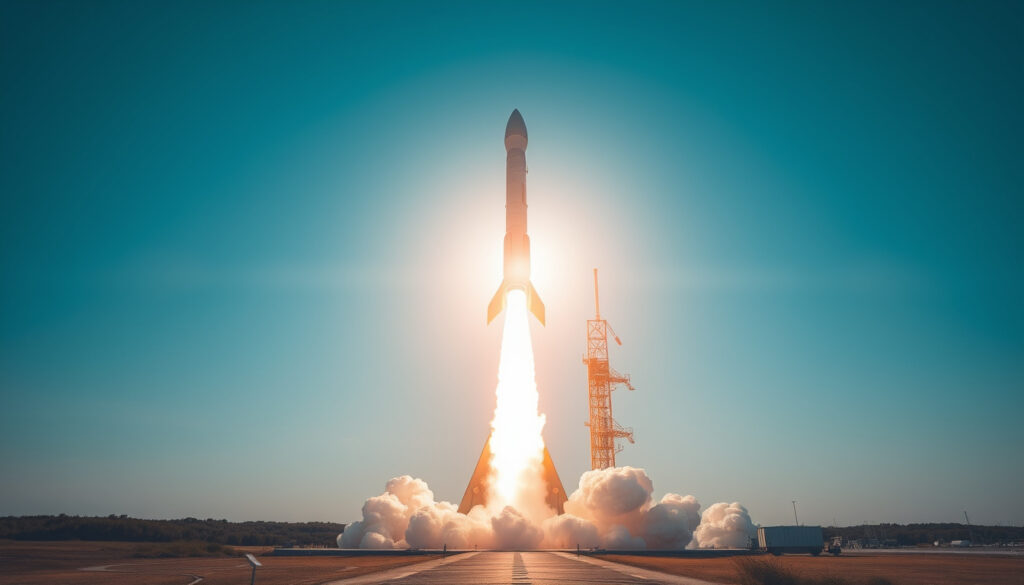
Rockets represent perhaps the most technologically significant application of Newton’s third law. In a rocket engine, fuel combustion produces hot gases that accelerate backward out of the nozzle. According to the third law, the rocket experiences an equal and opposite force pushing it forward. This principle enables spacecraft to operate in the vacuum of space, where no air exists to push against. According to NASA’s educational resources, rockets achieve propulsion not by pushing against the air behind them but by expelling mass backward, with the rocket itself being pushed forward in response.
This capability distinguishes rockets from aircraft that rely on airfoil interactions with atmosphere. Spacecraft cannot use propellers or wings in the same way that airplanes do because no air exists in the vacuum of space. The third law provides the only viable mechanism for acceleration beyond Earth’s atmosphere, making it indispensable for space exploration.
Who Discovered Newton’s Third Law and When?
Isaac Newton formulated this law as part of his comprehensive work on motion and mechanics. His treatise, Philosophiæ Naturalis Principia Mathematica, commonly known as the Principia, appeared in 1687. The work established the three laws of motion that bear his name and laid the mathematical foundation for classical physics. Newton presented the third law as Law III, stating: “To every action there is always opposed an equal reaction.”
Newton did not develop his laws in isolation. His work built upon observations and theories from predecessors including Galileo Galilei and René Descartes. However, Newton synthesized these earlier ideas into a coherent mathematical framework that accurately predicted mechanical phenomena throughout the observable universe. The historical development of these laws represented a watershed moment in scientific history.
Visual Timeline
- 1666: Newton begins developing his laws of motion during a period of isolation in Woolsthorpe
- 1687: Published in Philosophiæ Naturalis Principia Mathematica
- 20th century: Laws applied systematically to rocketry development by pioneers such as Konstantin Tsiolkovsky, Robert Goddard, and later Wernher von Braun
What Are Common Misconceptions About Newton’s Third Law?
Several persistent misunderstandings surround this fundamental principle. One of the most prevalent involves the false assumption that action-reaction forces cancel each other out. As established earlier, these forces act on different objects and therefore cannot cancel. A rocket accelerating upward clearly demonstrates this: the exhaust pushing downward on the gases does not prevent the rocket from moving upward because those forces act on different objects.
Another common misconception holds that equal forces mean equal accelerations. This assumption fundamentally misunderstands the relationship between force and motion. While the forces in an action-reaction pair are always equal in magnitude, the resulting accelerations depend on the masses of the respective objects. A bullet and a gun experience equal forces during firing, but the bullet’s much smaller mass produces a far greater acceleration, sending it高速 down the barrel while the gun recoils more slowly.
Forces and Object Identity
Some confusion arises from incorrectly identifying which forces constitute an action-reaction pair. Consider an object resting on a table: gravity pulls the object downward, while the table pushes upward on the object. These forces are equal and opposite, but they are NOT an action-reaction pair under Newton’s third law. Rather, they represent an equilibrium condition for the object itself. The true action-reaction pair involves the object pushing down on the table and the table pushing up on the object.
Gravity and the normal force from a surface are often mistakenly identified as an action-reaction pair. They are not. The gravitational force on an object and the normal force from the surface both act on the same object—the book in this example. Newton’s third law specifically requires the two forces to act on different objects. The actual third law pair involves the object pushing on the surface and the surface pushing back on the object.
Application in Space
A question frequently arises about whether Newton’s third law applies in the vacuum of space. The answer is definitively yes. The law describes interactions between objects, and rocket exhaust gases interacting with the rocket itself provide exactly this interaction. No atmosphere is necessary because the third law concerns the relationship between two objects, not the medium surrounding them. This misunderstanding may stem from confusing the third law with principles involving air resistance or aerodynamic lift.
The law does have limitations, however. At speeds approaching the speed of light, the simple vector formulation requires modification under Einstein’s special relativity. In these conditions, simultaneity of forces between distant objects becomes frame-dependent, and momentum conservation must be expressed using four-vectors rather than simple vector addition. These modifications become significant only in extreme conditions, making Newton’s original formulation accurate for virtually all engineering applications on Earth and in near-Earth space.
Certainty and Limitations
| Established Information | Limitations and Caveats |
|---|---|
| Force pairs are equal and opposite in classical mechanics | Requires modification at relativistic speeds |
| Forces act on different objects | Does not apply to some quantum entanglement phenomena |
| Momentum conservation follows from the law | Momentum conservation remains valid in relativity but requires different formulation |
| Works in vacuum of space | Assumes instantaneous force transmission; not valid in quantum field theory |
Analysis and Broader Context
Newton’s third law occupies a central position within the larger system of his mechanical laws. Together, the three laws provide a complete framework for analyzing physical motion. The first law establishes that objects maintain their state of motion unless acted upon by external forces. The second law quantifies how forces change that motion. The third law reveals that forces always occur in mutual pairs between interacting objects.
This interconnected system has enabled centuries of engineering achievement. Structural engineers apply the third law when designing buildings and bridges, ensuring that forces between components are properly balanced. Automotive engineers use the principles to design crumple zones and safety systems that manage collision forces. Aerospace engineers rely on the law for everything from wing design to rocket propulsion.
“To every action there is always opposed an equal reaction.”
— Isaac Newton, Philosophiæ Naturalis Principia Mathematica, 1687
Modern applications extend from everyday technologies to cutting-edge research. Electric motors harness electromagnetic force pairs to convert electrical energy into rotational motion. Marine engineers design propellers that push water backward to move vessels forward. Sports scientists analyze athletic movements to optimize performance using these same fundamental principles.
What’s Next: Applications Today
Contemporary rocketry builds directly on Newton’s principles. SpaceX’s Merlin engines and Blue Origin’s BE-3 engines both operate on action-reaction propulsion. NASA continues applying these laws in developing next-generation propulsion systems. The upcoming Artemis missions to the Moon and planned Mars missions depend entirely on accurate application of Newton’s third law for trajectory calculations and propulsion design.
Collision safety technology in automobiles applies third law principles to protect occupants. Modern crumple zones are designed to manage impact forces systematically, extending deceleration time to reduce forces on passengers. Seatbelt pretensioners and airbag deployment systems all rely on careful calculations involving force pairs and momentum transfer.
For those interested in exploring related topics, an examination of Think and Grow Rich – Complete Guide to 13 Principles offers insight into how foundational principles influence success across domains. Similarly, understanding the benefits and risks of fasting demonstrates how scientific principles guide health-related decisions.
Key Sources and References
The primary historical source for Newton’s laws remains his original publication in Philosophiæ Naturalis Principia Mathematica, available through digital archives. Modern physics education resources from The Physics Classroom provide comprehensive explanations suitable for students and educators. NASA maintains educational materials explaining the laws in the context of aerospace applications.
Additional authoritative sources include OpenStax University Physics textbooks, which provide peer-reviewed explanations with mathematical rigor, and the LibreTexts physics library, which offers detailed derivations and examples. These resources collectively demonstrate how Newton’s third law remains a cornerstone of physics education more than three centuries after its initial publication.
Summary
Newton’s third law of motion establishes that for every action force, there exists an equal and opposite reaction force. These forces act simultaneously on different objects, share identical magnitude, and point in opposite directions. The law finds application across every domain of classical mechanics, from walking and swimming to rocket propulsion in space. While modifications become necessary at relativistic speeds, the principle remains accurate for virtually all practical engineering applications on Earth and throughout the solar system. Understanding this law provides essential insight into how forces govern motion in the physical universe.
Frequently Asked Questions
What are three examples of Newton’s third law?
Three everyday examples include: a person standing on a floor where gravity pulls down and the floor pushes up; walking where feet push backward on the ground and the ground pushes the person forward; and swimming where hands push water backward and the water propels the swimmer forward.
Does Newton’s third law apply in space?
Yes. The law applies in the vacuum of space because it describes interactions between objects, not between an object and a surrounding medium. Rockets achieve propulsion by expelling exhaust gases backward; the gases push forward on the rocket according to Newton’s third law.
Why don’t action and reaction forces cancel each other?
Action and reaction forces cannot cancel because they act on different objects. One force acts on object A while the other acts on object B. Since cancellation requires forces acting on the same object, these distinct forces never interfere with each other’s motion.
What is the difference between Newton’s second and third laws?
The second law quantifies how a single object responds to forces using F = ma, while the third law describes forces between two interacting objects. The second law addresses net force on one object; the third law addresses mutual forces shared between objects.
Do equal forces mean equal accelerations?
No. Action-reaction pairs always have equal magnitudes, but accelerations depend on each object’s mass. A lighter object subjected to the same force experiences greater acceleration than a heavier object.
Is gravity part of an action-reaction pair?
Gravity represents mutual attraction between two objects with mass. The Earth pulls on a falling object while the object pulls on the Earth. The normal force from a surface is a separate contact force and is not part of the gravitational interaction.
How does rocket propulsion work using Newton’s third law?
Rocket engines burn fuel to produce hot gases that accelerate backward out of the nozzle. As the gases push backward on the rocket, the rocket pushes forward on the gases with equal force. The forward force on the rocket provides the thrust that propels the spacecraft.
More related posts
 50 Cent Diddy Documentary: Is It on Netflix
 From Dusk Till Dawn Cast: Full List, Ages, Trivia (1996)
 Full Mouth Dental Implants: Ireland vs Turkey Costs
 How to Make Brown: Simple Color Mixing Methods Explained
 A Friend of the Family: Watch, Cast, True Story Guide
 Earthquake 5 Minutes Ago in California: Live Updates & Data
 Hello Kitty Characters Names: Full List and Guide
 No Tax on Tips: $25,000 Deduction for Tipped Workers