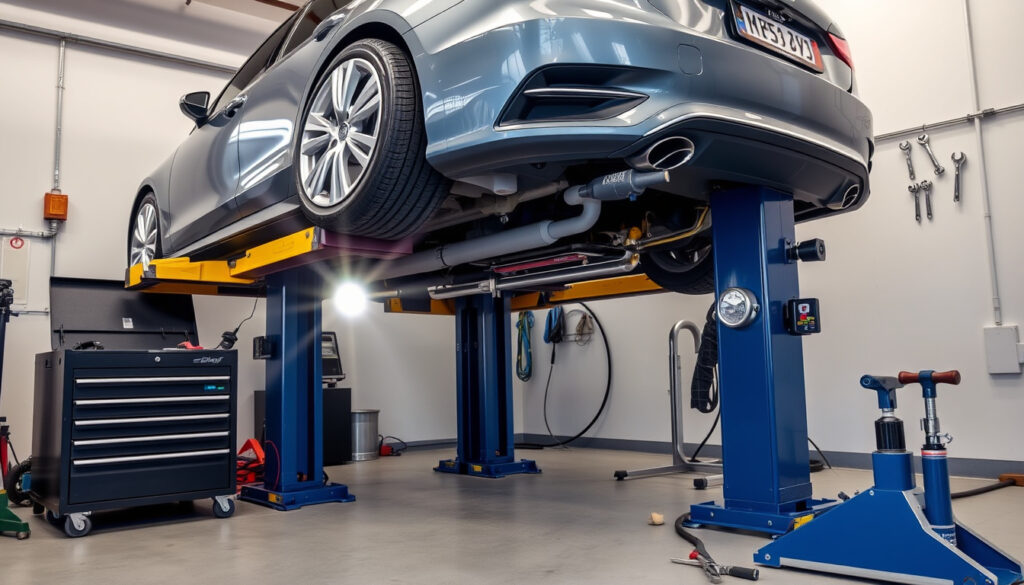
How to Align Car Tires: DIY at Home vs. Professional Service
Few things upset a car’s handling like misaligned wheels. You feel it in the steering wheel, see it in the tire tread, and wonder if you can fix it yourself. This guide walks through DIY alignment methods using simple tools, the warning signs you shouldn’t ignore, and when it’s worth paying a professional.
DIY kit cost: $20–$40 RISING EDGE (DIY alignment resource) ·
Alignment type: toe only with string method YouTube (automotive tutorial) ·
Professional cost: $75–$100 Bridgestone Tire (tire manufacturer guidance)
Quick snapshot
- Misalignment causes uneven tire wear YouTube (DIY alignment demonstration)
- DIY toe adjustment is possible with strings RISING EDGE (alignment methods) (YouTube (DIY alignment demonstration))
- Potholes and curbs are common causes HP Academy (motorsport alignment forum)
- Exact lifetime savings from DIY over professional alignment Reddit (CarTalk community)
- Long-term accuracy of home string methods vs. shop alignment Speed Academy (DIY guide)
- Check alignment after hitting a pothole or curb Speed Academy (alignment causes)
- String alignment can detect toe issues when symptoms appear RISING EDGE (diagnostic use)
- Attempt a DIY string alignment if symptoms are mild YouTube (step-by-step guide)
- Visit a professional for camber/caster issues or persistent pull HP Academy (professional alignment importance) (YouTube (step-by-step guide))
Four key comparison points between DIY and professional alignment, drawn from expert sources:
| Metric | DIY string alignment | Professional shop alignment |
|---|---|---|
| Equipment cost | $20–$40 RISING EDGE (DIY kit cost) | $75–$100 Bridgestone Tire (professional service pricing) |
| Time required | 1–2 hours | 30–60 minutes |
| Angles adjusted | Toe only YouTube (DIY adjustment range) | Camber, caster, toe HP Academy (angles overview) |
| Precision | ±1/16 inch (approx.) | ±0.01 degree Speed Academy (precision stats) |
| Level surface required | Yes, corner-to-corner level Reddit (level requirement) | Yes, shop floor |
How can I align my tires myself?
What you need for DIY tire alignment
- 4 jack stands and a length of string (fishing line or nylon) – total cost under $20 RISING EDGE (DIY kit breakdown)
- Tape measure, ruler or digital caliper for measuring gaps YouTube (tool list)
- A level to ensure the car is corner-to-corner level Reddit (level requirement)
- Low-friction material (like plastic bags) under front tires to settle suspension Reddit (community tip)
Step-by-step string alignment method
- Park the car on a level surface and inflate all tires to the same pressure. “To get accurate measurements, the vehicle should be on a level surface and the tires should be inflated evenly” YouTube (DIY alignment instructor).
- Set up four jack stands at the corners of the car and run a string along each side, centered to the chassis centerline. A precise string setup must be parallel to the vehicle centerline or the resulting alignment numbers will be skewed HP Academy (motorsport forum).
- Lower the vehicle and settle the suspension by rolling it back and forth before measuring. “After lowering the vehicle, the suspension should be settled by rolling the car back and forth before measuring” YouTube (settling technique).
- Keep the steering wheel straight. “The steering wheel should be kept straight before taking string measurements” YouTube (steering straightening).
- Measure the gap between the rim edge and the string at the front and rear of each wheel. Use a ruler or digital caliper for consistency. Measurements should be taken from the rim edge rather than the tire sidewall for better consistency YouTube (measurement point).
- If front and rear track widths differ, compensate the string box accordingly. For example, a 1-inch rear track-width difference requires placing the string 1/2 inch farther from the center of the rear wheels Speed Academy (track width compensation).
- Adjust tie rods until the front and rear rim-to-string measurements are equal on each side. After adjustment, roll and bounce the car, then recheck. The same guide recommends rolling and bouncing the car after toe or camber changes before remeasuring Speed Academy (settle-and-recheck).
DIY string alignment only adjusts toe. It cannot correct camber or caster issues. For those angles, you still need a professional rack with laser sensors.
The implication: DIY alignment is a cost-effective way to fix toe problems, especially after a curb hit, but it requires patience and a level surface. If you skip the settling step, your measurements will be off by a quarter-inch or more.
TL;DR: DIY string alignment is a weekend project that saves $75–$100 on toe adjustments, but it demands patience and a perfectly level surface. Skip it if you have a luxury car, need camber fixes, or lack the tools.
The catch: DIY toe alignment is cheap and educational, but it won’t fix a worn suspension or bent control arm.
How do you tell if your tires are misaligned?
Common symptoms of misaligned tires
- Vehicle pulls to one side when driving straight – the most common symptom YouTube (alignment symptom diagnosis)
- Steering wheel off-center even when the car goes straight YouTube (steering wheel positioning)
- Uneven or rapid tire wear – feathering on one edge indicates too much toe-in or -out RISING EDGE (wear patterns)
- Vibration in the steering wheel at highway speeds (can also be balance-related)
How to perform a visual check at home
Park on a level surface, turn the steering wheel straight, and sight from above the front wheels. If one front tire points inward or outward more than the other, you have a toe misalignment. You can also measure from the center of the front tread to the center of the rear tread on the same side; a difference of more than 1/8 inch suggests misalignment Reddit (quick check method).
Why this matters: catching misalignment early saves tire life. A driver who ignores a pull for 5,000 miles could wear out a set of tires twice as fast, adding $300–$600 in replacement costs.
What throws your car out of alignment?
Road hazards and driving habits
- Hitting potholes, curbs, or speed bumps too fast – the leading cause Speed Academy (impact damage)
- Accidents and minor collisions, even low-speed bumps
- Driving over rough terrain or railroad crossings repeatedly
Worn suspension components
- Worn ball joints, bushings, or tie rods allow play that shifts alignment HP Academy (suspension wear)
- Lowered or lifted suspension changes geometry and often requires realignment
- Replacing control arms, struts, or springs can knock alignment off by several degrees
The pattern: most alignment problems are mechanical – either a direct impact or gradual wear. A DIY string alignment won’t fix worn parts; it will only adjust the toe on a worn suspension, which is temporary.
Can I drive if my tires aren’t aligned?
Risks of driving with misalignment
- Accelerates tire wear – up to 50% shorter tread life Bridgestone Tire (tire wear impact)
- Fuel economy penalty – 3–5% increase in rolling resistance FuelEconomy.gov (US government)
- Handling degradation – less stable at highway speeds, especially in wet conditions
When to get immediate service
If the steering wheel is severely off-center (more than 15 degrees), the car pulls hard to one side, or you hear tire scrubbing noises, stop driving and have the alignment checked at a shop. Severe misalignment can cause loss of control in an emergency Speed Academy (safety warning).
The trade-off: driving a few miles to a shop with mild misalignment won’t ruin your tires, but putting off a fix for months costs real money in premature tire replacement and extra fuel.
What goes first, alignment or balance?
Why balancing comes before alignment
Tires should be balanced before alignment because an unbalanced tire causes vibration that can mimic alignment issues. If you align first and then balance, the balancing may shift the toe setting slightly YouTube (order of operations).
Difference between balancing and alignment
- Balancing corrects weight distribution around the tire/wheel assembly – it prevents vibration, not tire wear from angle issues Bridgestone Tire (balancing explanation)
- Alignment sets the angles of the wheels relative to each other and the road surface – it prevents uneven wear and improves handling
What this means: if you have a vibration at speed, get the tires balanced first. If you still have a pull or uneven wear after balancing, then move to alignment. Doing them in the wrong order wastes time and money.
Some shops bundle balancing and alignment into one service. Always ask which is included. A proper shop will balance before aligning on the lift.
The bottom line: balancing solves shaking; alignment solves pulling. Doing them in the wrong order wastes time and reinforces the wrong fix.
Confirmed facts vs. what’s unclear
Confirmed facts
- Misalignment causes uneven tire wear RISING EDGE (wear and alignment study)
- DIY toe adjustment is possible with strings YouTube (DIY adjustment tutorial)
- Potholes and curbs are common causes Reddit (common causes discussion)
What’s unclear
- Exact lifetime savings from DIY over professional alignment Speed Academy (cost analysis)
- Long-term accuracy of home string methods vs. shop alignment HP Academy (accuracy comparison)
- Whether string alignment can detect subtle camber issues YouTube (camber detection limits)
- Professional alignment costs $75–$100 (depends on location and shop)
- String alignment measures each wheel individually (demands precise setup)
For a driver who wants to save $75–$100 and has basic tools, DIY string alignment is a viable option for toe-only fixes. But anyone with a luxury car, advanced suspension, or suspicion of camber problems should skip the string and book a shop appointment.
Expert perspectives on alignment
“A professional alignment uses a lift, four clamps, and laser sensors that read each wheel’s angle to within a hundredth of a degree. DIY string methods are fine for race cars in a pinch, but for a daily driver, the precision of a machine is worth the money.”
— Moog Parts Moog (suspension component manufacturer)
“We recommend having your alignment checked every 6,000 miles or after any significant impact. Proper alignment not only extends tire life by up to 50% but also improves fuel economy and safety.”
— Bridgestone Tire Bridgestone Tire (tire care guide)
The implication: the experts agree that professional alignment is more precise, but DIY methods are acceptable for temporary or track use. The key is knowing which alignment angles matter for your car and driving conditions.
Summary
DIY string alignment works for toe adjustments, costs under $40, and can be done in a weekend. But it’s not a substitute for a professional alignment that addresses camber and caster. For the typical driver on public roads, a $75–$100 shop alignment every 12,000 miles is a better investment than replacing tires early. For the enthusiast or budget-conscious owner, string alignment is a valuable skill – provided you understand its limits. The choice is clear: know your car’s needs, use the right method, and don’t let a simple toe issue become a costly tire bill.
reddit.com, risingxedge.com, youtube.com, miataturbo.net, speed.academy, tiktok.com, facebook.com
For those who prefer a more traditional approach, a detailed step-by-step wheel alignment guide provides measurements for toe, camber, and caster angles.
Frequently asked questions
How often should I get a wheel alignment?
Most manufacturers recommend every 6,000 miles or when you notice symptoms like pulling or uneven tire wear. After any major impact, have it checked Bridgestone Tire (alignment frequency).
Does wheel alignment fix vibration in the steering wheel?
No – vibration usually comes from unbalanced tires or a bent rim. Alignment addresses angles, not weight distribution. Balance first, then align if needed YouTube (vibration vs. alignment).
Can alignment affect gas mileage?
Yes. Misalignment increases rolling resistance, which can reduce fuel economy by 3–5% FuelEconomy.gov (rolling resistance).
Is wheel alignment the same as tire balancing?
No. Balancing corrects weight distribution around the tire; alignment sets wheel angles. Both are needed for optimal tire life and driving comfort Bridgestone Tire (balancing service info).
What are the three main alignment angles?
Camber (tilt inward/outward), caster (steering axis tilt), and toe (angle from straight ahead). Toe is the only angle easily adjusted with DIY methods RISING EDGE (angles explained).
Can I check alignment at home without tools?
You can perform a visual check by looking at tire wear patterns and using a tape measure to compare front-to-rear distances on the same side. A precise measure requires a string setup Reddit (home inspection).
How much does a professional alignment cost?
In the US, a basic two-wheel alignment runs $75–$100 on average. A four-wheel alignment for modern cars can cost $100–$150 Bridgestone Tire (pricing details).
Related reading
- 2024 Acura TLX Type S: Price, Specs, 0-60 & Worth Buying? – performance specs of a car that benefits from precise alignment.
- State Farm Drive Safe & Save: Is It Worth the Trade-Off – a safety-focused insurance program that rewards good driving habits, including proper vehicle maintenance.
More related posts
 Mavericks vs Warriors: Complete Player Stats Breakdown
 Duplex for Sale Near Me: Prices, Rules & Buying Guide in Ireland
 Nike Air Max 270 – Lab-Tested Comfort, Sizing and Price Guide
 5 Letter Words Starting with A – Full List for Wordle and Scrabble
 What’s My IP Address? Check Public & Private IP
 When Does Spring Start 2025? March 20 Equinox Date
 Steve Carell Movies and TV Shows – Complete Career Guide
 What Time Do the Tigers Play Today? Schedule & TV Info