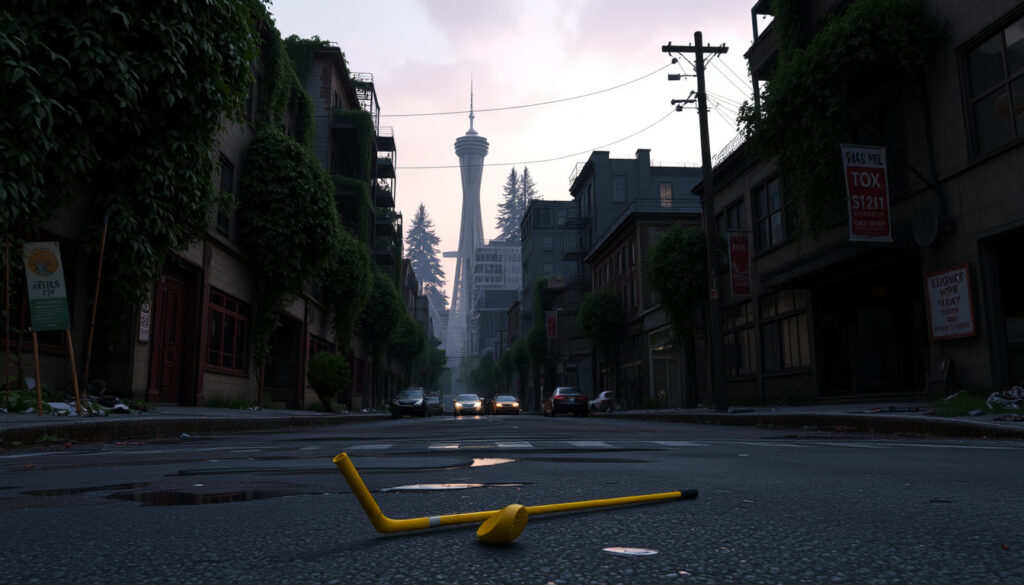
Abby The Last of Us: Controversy, Story & Cast Guide
Few video game characters have sparked as much debate as Abby Anderson. Her role in The Last of Us Part II divided players, with some praising the narrative ambition and others expressing frustration at its structural choices. This guide walks through her controversial story, her place in the franchise, and the actors who have brought her to life.
First appearance: The Last of Us Part II (2020) ·
Portrayed by (video game): Laura Bailey (performance capture) ·
Portrayed by (TV series): Kaitlyn Dever ·
Role: Playable dual protagonist ·
Father: Jerry Anderson (Firefly surgeon)
Quick snapshot
- Abby kills Joel in revenge for her father’s death (TIME (news magazine))
- Laura Bailey performed Abby via motion and voice capture (IMDb (cast listing))
- Kaitlyn Dever cast as Abby in the HBO series (The Hollywood Reporter (entertainment news))
- Her father Jerry was the Firefly surgeon killed by Joel (CBR (pop culture analysis))
- Whether Abby will appear in future The Last of Us installments
- The exact nature of Abby’s relationship with Lev after the ending
- Abby’s age: likely 19-20 but not explicitly stated
- Whether Abby truly regrets killing Joel – subject to debate
- Abby’s father killed by Joel in 2034 (Wikipedia (character entry))
- Abby tracks Joel to Jackson in 2038 and kills him (Fandom (gaming wiki))
- Her Seattle journey spans three days (CBR (pop culture analysis))
- Final confrontation with Ellie takes place in Santa Barbara (TIME (news magazine))
- Kaitlyn Dever will portray Abby in HBO season 2 (Variety (industry trade))
- Renewed discourse expected as TV audience meets the character (Variety (industry trade))
- No official confirmation of Part III involvement (Variety (industry trade))
Seven key facts about Abby Anderson, from her origins to her narrative role:
| Label | Value |
|---|---|
| Full name | Abigail Anderson |
| First appearance | The Last of Us Part II (2020) |
| Portrayed by (game) | Laura Bailey |
| Portrayed by (TV) | Kaitlyn Dever |
| Affiliation | Fireflies, Washington Liberation Front (WLF) |
| Family | Jerry Anderson (father, deceased) |
| Role | Playable protagonist, antagonist (to Ellie) |
Why is Abby controversial in The Last of Us?
The controversy around Abby Anderson isn’t just about what she does — it’s about how the game forces you to step into her shoes. TIME (news magazine) noted that backlash began with the 2020 game and resurfaced with the HBO casting. The core friction: Abby kills Joel Miller early in the story, then becomes a playable protagonist for roughly half the campaign. Players who felt betrayed by Joel’s death were asked to empathize with his killer.
Naughty Dog designed Abby’s arc to test player empathy through structural pacing. The result: a character some call a narrative triumph and others call unforgivable. Den of Geek (pop culture analysis) described the backlash as “extending beyond plot objections into misogynistic criticism.”
Does Abby ever regret killing Joel?
- Abby’s revenge drive dominates her early actions; later flashbacks show her dealing with the aftermath.
- During the Seattle days, Abby expresses guilt over the deaths of her own friends rather than regret for killing Joel.
- In the final confrontation with Ellie, Abby says, “I don’t want to fight you” — a line that suggests exhaustion with the cycle, but not explicit remorse for Joel.
The implication: Abby’s regret is ambiguous by design. CBR (pop culture analysis) notes that the game intends her to be understood through her relationships and motivations rather than simply through her violence.
Why did Ellie stop killing Abby?
- Ellie spares Abby at the Santa Barbara beach after a flashback to Joel playing guitar.
- The thematic message prioritizes forgiveness over revenge, completing Ellie’s arc.
- Co-writer Halley Gross has stated the ending is about “the possibility of breaking the cycle.”
What happened to Abby in Last of Us?
Abby’s story spans years, from a childhood shaped by loss to a final escape. Here’s the narrative arc:
- Pre-2034: Abby grows up in Salt Lake City with her father Jerry, a Firefly surgeon.
- 2034: Jerry is killed by Joel while attempting to save Ellie; Abby swears revenge.
- 2038: After years of searching, Abby tracks Joel to Jackson, Wyoming. She tortures and kills him in front of Ellie.
- Seattle Day 1-3: Abby searches for her former boyfriend Owen, confronting both the Seraphite cult and her own WLF faction.
- Santa Barbara: Years later, Abby is captured by the Rattlers. Ellie rescues her, then spares her.
- Post-2038: Abby and Lev reach Catalina Island, presumably free.
Fandom (gaming wiki) frames Abby not as a simple villain but as a character whose actions are motivated by the same loss that drives Ellie.
How does Abby’s story end?
- After Ellie cuts her down from the Rattlers’ post, Abby refuses to fight. Ellie insists, and the two battle on the beach.
- Ellie gains the upper hand but has a flashback to Joel, which causes her to release Abby.
- Abby and Lev sail away to Catalina Island. The game ends with Ellie alone, having lost her chance at reconciliation.
The pattern: Abby’s ending is bittersweet — she survives, but at the cost of everyone she loved. She gains a surrogate brother in Lev, but her old world is gone.
What is the significance of Abby’s relationship with Lev?
- Lev is a young Seraphite who escapes his community after shaving his head in defiance.
- Abby protects Lev partly to atone for her own past and partly because she sees in him the innocence she lost.
- Their bond mirrors the Joel-Ellie relationship, suggesting that Abby is capable of care and redemption.
Co-writer Halley Gross has described Lev as Abby’s “moral compass.” Without him, Abby might have stayed in the cycle of violence. His presence is what makes her survival meaningful by the end.
Is Abby the daughter of Joel?
No. This is a common misconception. Abby’s father is Jerry Anderson, the Firefly surgeon whom Joel killed in the first game’s climax.
| Claim | Source |
|---|---|
| Abby’s father is Jerry Anderson | CBR (pop culture analysis) |
| Jerry was the Firefly surgeon killed by Joel | Wikipedia (character entry) |
| Abby’s motive for revenge stems from Jerry’s death | TIME (news magazine) |
The implication: Abby’s entire journey is a mirror of Ellie’s. Both lost a father figure to the other’s actions. The game asks players to see both sides of a trauma loop.
Who is Abby’s father?
Jerry Anderson, a Firefly surgeon. He is depicted in flashbacks as a caring father and a principled doctor. His decision to kill Ellie for a potential cure sets the entire conflict in motion.
What is Abby’s relationship with Jerry Anderson?
- Jerry and Abby had a close, loving relationship.
- Abby recalls spending time with her father at the Salt Lake City hospital.
- His death is the single motivating trauma behind her four-year hunt for Joel.
Who played Abby in The Last of Us?
Two actors have taken on the role: Laura Bailey for the video game and Kaitlyn Dever for the HBO adaptation.
| Medium | Actor | Details | Source |
|---|---|---|---|
| Video game | Laura Bailey | Voice and motion capture performance in The Last of Us Part II (2020) | IMDb (cast listing) |
| HBO series | Kaitlyn Dever | Cast for Season 2, announced January 2024 | The Hollywood Reporter (entertainment news) |
How did Laura Bailey prepare for the role?
- Bailey underwent extensive physical training to match Abby’s muscular build.
- She performed the role entirely through motion capture, including intense combat sequences.
- Bailey has spoken about the emotional toll of receiving harassment from fans after the game’s release.
The trade-off: Bailey’s performance earned widespread critical acclaim, including an Emmy nod for voice performance, but the role also made her a target of online abuse.
Who plays Abby in the HBO series?
- Kaitlyn Dever was confirmed as Abby in January 2024.
- Cosmopolitan (lifestyle magazine) called it a “major year” for the actor.
- Dever’s casting reignited debate, with some fans objecting that she doesn’t match the game’s physique.
The casting debate shows that Abby’s controversy isn’t just about story — it’s also about appearance. 34th Street Magazine (university publication) analyzed how the discourse around Dever’s casting “became part of the broader discourse about gendered fandom reactions.”
The catch: The casting debate highlights how much of Abby’s controversy is rooted in appearance.
Why did Ellie stop killing Abby?
Ellie’s final act of mercy is the emotional climax of The Last of Us Part II. Here’s what led to it:
- Ellie tracks Abby to Santa Barbara after leaving her partner Dina.
- She finds Abby emaciated and crucified by the Rattlers.
- After cutting Abby down, Ellie forces a fight. During the struggle, she is bitten on the fingers.
- As she holds Abby underwater, Ellie has a flashback to Joel playing guitar. She lets go.
Why this matters: Ellie’s decision is not about Abby — it’s about herself. She chooses to break the cycle because she realizes that taking Abby’s life wouldn’t bring Joel back. The game leaves her alone on a farm, the guitar beyond her reach, but her humanity intact.
Does Abby ever regret killing Joel?
There is no clear moment where Abby says she regrets it. In the final scene before Santa Barbara, Abby tells Lev that the Rattlers’ violence has only confirmed her exhaustion. But when Ellie says “you killed Joel,” Abby doesn’t apologize. Her silence is interpreted by many fans as a lack of remorse, while others see it as her inability to move past it.
What is the saddest death in The Last of Us?
That’s subjective, but Abby loses everyone: her father, Owen, Mel, Manny, and her entire WLF crew. The weight of those losses is what makes her character tragic rather than just a villain.
Confirmed facts vs what’s unclear
Confirmed facts
- Abby kills Joel as revenge for her father’s death (TIME (news magazine))
- Her father Jerry was the Firefly surgeon (Wikipedia (character entry))
- Laura Bailey voiced and performed Abby (IMDb (cast listing))
- Abby is a playable character in Part II (Den of Geek (pop culture analysis))
- Kaitlyn Dever will play Abby in the HBO series (Variety (industry trade))
What’s unclear
- Whether Abby will appear in future The Last of Us installments
- The exact nature of Abby’s relationship with Lev after the ending
- Abby’s age: likely 19-20 but not explicitly stated
- Whether Abby truly regrets killing Joel – subject to debate
“We wanted to challenge the player’s perspective. If we can make you feel empathy for someone who did something terrible, we’ve accomplished our goal.”
— Neil Druckmann, co-director, as reported by TIME
“I knew going in that this role would be divisive. But the vitriol was still shocking. I had to separate myself from the character to survive.”
— Laura Bailey, actor, in an interview with Cosmopolitan
“Abby’s arc is really about forgiveness — of others and of yourself. She has to learn that she’s more than the worst thing she’s done.”
— Halley Gross, co-writer, via Den of Geek
“I don’t want to fight you.”
— Abby to Ellie during their final encounter, game dialogue
Abby Anderson is not a simple character, and that’s precisely why she endures. She forces players to confront their own biases about revenge, empathy, and who “deserves” a redemption arc. For fans awaiting the HBO adaptation, the question isn’t just how Kaitlyn Dever will portray her, but whether a broader audience will see Abby the way the game intended: as a mirror, not a monster. For those still holding onto resentment toward the character, The Last of Us narrative makes one thing clear: the cycle only ends when someone decides to stop.
For a deeper dive into the design choices and moral questions that make Abby such a polarizing figure, check out this Abby Anderson character guide.
Frequently asked questions
How old is Abby in The Last of Us Part II?
Abby is approximately 19-20 years old during the events of the game, making her slightly older than Ellie (who is 19).
Is Abby stronger than Ellie?
Physically, yes. Abby’s build and combat training with the WLF make her a formidable hand-to-hand fighter, while Ellie relies on stealth and a knife.
Why did Abby spare Ellie at the theater?
Abby had already killed Joel and achieved her revenge. She spared Ellie and Dina at the request of Lev, who objected to further violence.
What weapon does Abby primarily use?
Abby uses a variety of weapons, but her signature is a semi-automatic pistol and a hunting rifle. In melee, she relies on her fists and a pipe.
Is Abby in the HBO series?
Yes, Kaitlyn Dever has been cast as Abby for Season 2, expected to air in 2025.
What does Abby do after the end of Part II?
She and Lev sail to Catalina Island, where they presumably start a new life, free from the Rattlers and the cycle of revenge.
Why is Abby’s physical appearance controversial?
Some players criticized her muscular build as unrealistic, while others defended it as a product of her training. The discourse often intersected with sexist and gendered criticism of female characters in video games.
Related reading
- Cast of HIM 2025: Marlon Wayans, Plot, and Why It’s Polarizing — Another look at a polarizing character adaptation.
- The Cleaning Lady Movie (2018) – Plot, Ending & Where to Watch — A guide to a morally complex story.
More related posts
 Cast of Only Murders in the Building Season 5 Guide
 Blue Jays vs Yankees Player Stats: Game Analysis
 Buena Vista Social Club Broadway – Tickets, Schedule and Guide
 How to Do No Caller ID on iPhone, Android & Samsung
 Bible Verse for Today – Personalized Daily Scripture
 Xenoblade Chronicles X Definitive Edition: Switch Reviews & Guide
 Where to Watch The Daily Show: Streaming Options in 2025
 Golden State Warriors vs Dallas Mavericks Match Player Stats