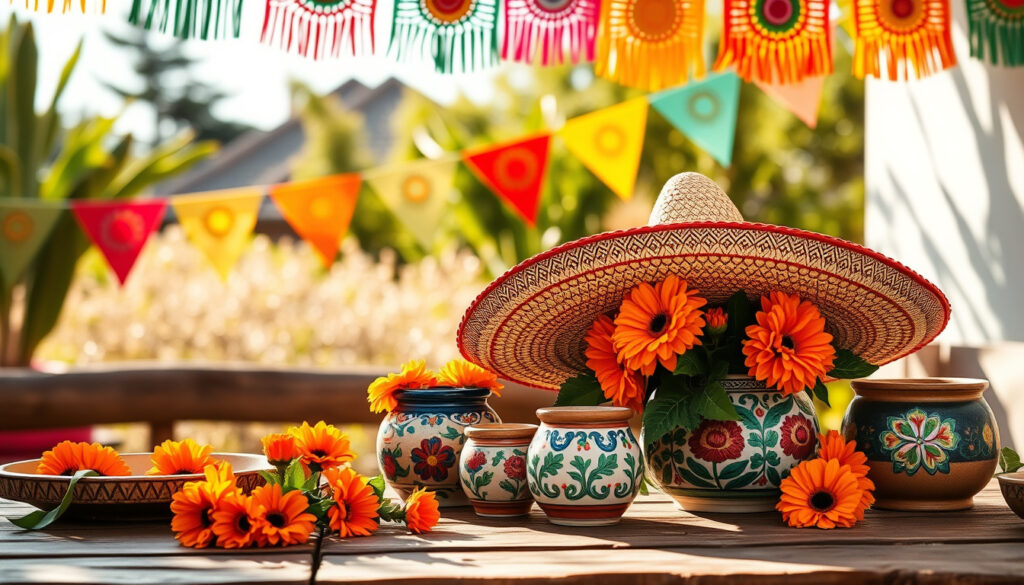
What Is Cinco de Mayo? History, Facts & US Celebration
Every May 5, millions of Americans gather for parties, margaritas, and tacos — but the real story behind Cinco de Mayo is far more surprising. It’s a tale of an outnumbered Mexican army defeating a European superpower, and a holiday that grew bigger in the United States than in Mexico itself.
Date of celebration: May 5, annually ·
Commemorates: Mexico’s victory at the Battle of Puebla (1862) ·
Major celebration region: United States (larger than in Mexico) ·
Primary misconception: Often mistaken for Mexican Independence Day (September 16)
Quick snapshot
- Cinco de Mayo commemorates the Battle of Puebla on May 5, 1862 (Encyclopaedia Britannica (historical reference))
- The battle was a Mexican victory over French forces (Encyclopaedia Britannica)
- It is not Mexican Independence Day (Library of Congress (U.S. federal library))
- The exact moment the holiday became a commercial phenomenon in the US is debated, but the role of the 1980s beer industry is well-documented.
- 1862: Battle of Puebla – outnumbered Mexican army defeats French forces (Encyclopaedia Britannica)
- 1980s–present: US commercialization accelerated by beer and tequila marketing (PBS NewsHour (public media journal))
- Growing calls for respectful celebration that honors the historical meaning rather than stereotypes (HISTORY (popular history channel))
Here are the key dates and figures that define the holiday.
| Label | Value |
|---|---|
| Date | May 5 |
| Year of Battle | 1862 |
| Commemorates | Mexican victory over French forces at Puebla |
| Primary Celebrants | United States (largest scale), State of Puebla, Mexico |
| Common Misconception | Mistaken for Mexican Independence Day |
What is the true story of Cinco de Mayo?
The Battle of Puebla: A David vs. Goliath victory
- The Mexican army, led by General Ignacio Zaragoza, defeated a larger and better-equipped French force on May 5, 1862 (Encyclopaedia Britannica (historical reference)).
- Zaragoza was Texas-born, adding a US-Mexico connection to the story (Library of Congress (U.S. federal library)).
The victory was a massive morale boost, but it didn’t end the French intervention. French forces remained in Mexico for several more years (Library of Congress).
Why France invaded Mexico in 1861
- Napoleon III used a debt-collection pretext to invade Mexico and establish a puppet monarchy (Encyclopaedia Britannica (history resource)).
- The French army was considered one of the best in the world at the time (War History Online (military history site)).
The pattern: Mexico’s underdog win became a lasting symbol of resistance, but the intervention itself dragged on for years.
The most common error is thinking Cinco de Mayo marks Mexican independence from Spain. That’s September 16, 1810 — a different war entirely (Library of Congress (U.S. federal library)).
What is the difference between Cinco de Mayo and Mexican Independence Day?
Cinco de Mayo vs. September 16: The two holidays explained
Two holidays, one common mix-up. This table shows the key distinctions.
| Holiday | Date | What it commemorates |
|---|---|---|
| Cinco de Mayo | May 5 | Victory over French forces at the Battle of Puebla (1862) |
| Mexican Independence Day | September 16 | Start of the war for independence from Spain (1810) |
| Day of the Dead (Día de Muertos) | November 1–2 | Honoring deceased loved ones; unrelated to military victories |
The takeaway: Cinco de Mayo is a regional military victory holiday, not a national independence day. Confusing the two is a widespread error, even among US celebrants (Wikipedia (general reference)).
Why don’t Mexicans celebrate Cinco de Mayo?
Celebration scale in Mexico vs. the United States
- In Mexico, Cinco de Mayo is primarily a regional holiday, most observed in the state of Puebla (PBS NewsHour (public media journal)).
- The holiday became popular in the United States in the 20th century, partly through Chicano activism and later beer and tequila marketing (HISTORY (popular history channel)).
The role of Chicano activists and commercial marketing in the US
- During the 1960s and 1970s, Chicano activists adopted Cinco de Mayo as a symbol of cultural pride and resistance (PBS NewsHour).
- By the 1980s, beverage companies transformed it into a major commercial event (HISTORY).
The implication: what started as a regional Mexican commemoration became a massive US cultural and commercial phenomenon, dwarfing its observance in Mexico.
The holiday is bigger in the US than in Mexico because it was adopted by Mexican Americans as a symbol of identity, then amplified by marketing — a dynamic that has little to do with the original 1862 battle.
Is it okay for white people to celebrate Cinco de Mayo?
Cultural appreciation vs. cultural appropriation
- Experts recommend celebrating the historical meaning, not stereotypes (HISTORY).
- Avoiding cultural appropriation involves learning about the holiday and avoiding offensive costumes or behavior (PBS NewsHour).
How to celebrate respectfully
- Focus on the history: read about the Battle of Puebla and share the facts.
- Support Mexican American businesses and authentic food, not tacky themed merchandise.
- Skip stereotypes like fake mustaches or sombreros — they undermine the holiday’s significance.
The trade-off: the holiday’s US popularity raises questions about respect, but it also opens a door for cross-cultural understanding if done right.
Do you say ‘Happy Cinco de Mayo’?
Common greetings: ‘Happy Cinco de Mayo’ and ‘Feliz Cinco de Mayo’
- Both “Happy Cinco de Mayo” and “Feliz Cinco de Mayo” are commonly used in the US (HISTORY).
- The greeting is generally accepted, especially in the US where the holiday is widely celebrated.
The bottom line: saying “Happy Cinco de Mayo” is fine — just be sure you know what you’re celebrating.
Timeline: From Battle to Holiday
- 1861 – France invades Mexico under the pretext of debt collection (Encyclopaedia Britannica).
- May 5, 1862 – Mexican army defeats French forces at the Battle of Puebla (Encyclopaedia Britannica).
- 1864–1867 – France establishes a puppet monarchy; the victory is celebrated as a symbolic national triumph (Library of Congress).
- 1930s–1970s – Chicano activists adopt Cinco de Mayo as a symbol of cultural pride (PBS NewsHour).
- 1980s–Present – Commercial marketing turns Cinco de Mayo into a major US commercial holiday (HISTORY).
Confirmed facts vs. What’s unclear
Confirmed facts
- The Battle of Puebla occurred on May 5, 1862 (Encyclopaedia Britannica).
- Cinco de Mayo is not Mexican Independence Day (Library of Congress).
- The holiday is a larger celebration in the US than in most of Mexico (PBS NewsHour).
What’s unclear
- The exact moment the holiday became a commercial phenomenon in the US is debated, but the role of the 1980s beer industry is well-documented (HISTORY).
Expert perspectives
“The victory at Puebla was a David-versus-Goliath moment that gave Mexico a huge morale boost, even though it didn’t end the French occupation.”
— Historian, Smithsonian Institution (U.S. museum and research complex)
“The modern Cinco de Mayo celebration in the United States owes more to 1960s Chicano activism and 1980s beer marketing than to the actual battle.”
For anyone celebrating this year, the choice is clear: honor the history and the culture, or risk turning a meaningful victory into a hollow party. The real story of Cinco de Mayo is worth raising a glass to — but only if you know what’s in it.
en.wikipedia.org, nationalgeographic.com, southerncoalition.org, es.wikipedia.org, britannica.com, pritzkermilitary.org
Frequently asked questions
What is the most common mistake people make about Cinco de Mayo?
Thinking it’s Mexican Independence Day. That’s September 16, not May 5 (Library of Congress).
Is Cinco de Mayo a federal holiday in Mexico?
No. It is not a federal holiday; schools and offices remain open nationwide except in Puebla, where the holiday is observed.
What food is traditionally eaten on Cinco de Mayo?
In Puebla, mole poblano is a traditional dish. In the US, tacos, guacamole, and margaritas are common but not historically linked.
Why did France want to invade Mexico?
Napoleon III sought to expand French influence in the Americas and used a debt dispute as a pretext (Encyclopaedia Britannica).
How is Cinco de Mayo celebrated in the United States?
With parades, parties, music, and food — often with a focus on Mexican American culture. The scale exceeds celebrations in Mexico (PBS NewsHour).
For a deeper look at historical explainers, read Why Did Japan Attack Pearl Harbor? and 7 Deadly Sins: Meanings, Order & History Explained.
More related posts
 What Time Does The Summer I Turned Pretty Season 3 Come Out
 Death at a Funeral – 2007 Original vs 2010 Remake
 Trump Address to Congress 2025: Full Speech and Transcript
 Buena Vista Social Club Broadway – Tickets, Schedule and Guide
 Posiciones de Atlético Nacional – 1st in Liga BetPlay 2026
 Wyd Meaning in Text: Social Cues and How to Reply
 Nicodemus in the Bible: Story, Importance, and Key Teachings
 Daisy Edgar-Jones: Endometriosis, Biography, and Career