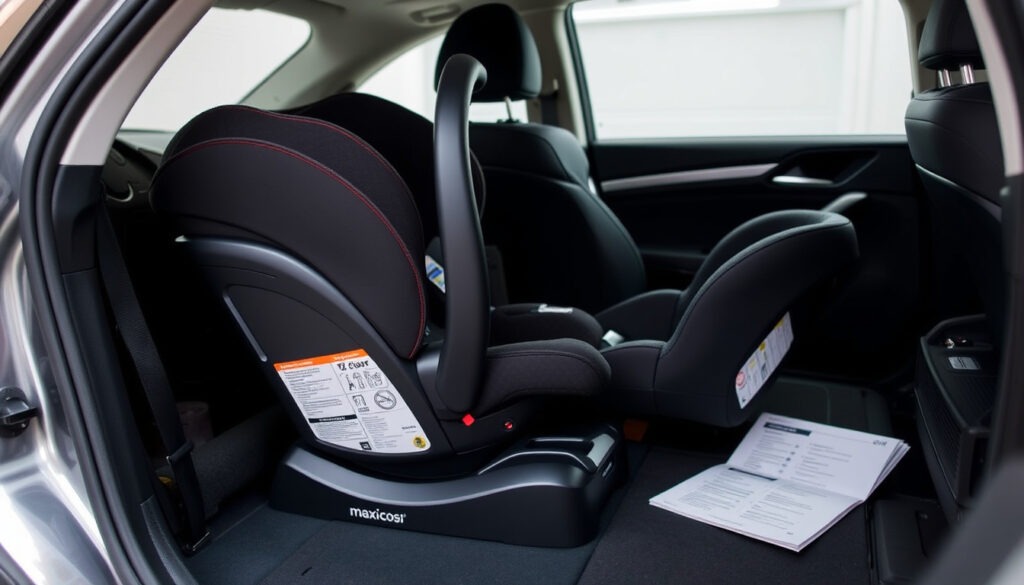
Maxi-Cosi Car Seat: Safety, Recalls, and Comparisons
Few baby products spark as much debate as car seats. Maxi-Cosi has been a trusted name for over 40 years, but a 2023 recall involving nearly 60,000 infant seats highlighted the importance of staying informed. The real story comes down to three things: safety, usage limits, and brand comparisons. We’ve gathered the data from official sources and expert recommendations.
Babies carried home: 50 million · Years in business: Over 40 · Safety certifications: i-Size, ADAC, ECE R44/04
Quick snapshot
- 2023 recall of 59,450 Maxi-Cosi and Safety 1st infant seats (ABC News)
- 2026 UK recall of FamilyFix Slide Pro base due to lock indicator fault (The Guardian)
- Maxi-Cosi is i-Size certified and meets ECE R44/04 standards (Maxi-Cosi Safety Notices)
- Brand founded in 1984, headquartered in Helmond, Netherlands (ABC News)
- Exact number of units affected in the 2023 recall beyond the 59,450 figure
- Whether the 2026 UK recall will expand to other markets
- Full details of the 2024 Coral 360 buckle issue (unconfirmed reports)
- Exact manufacturing date range for the 2023 recalled seats has not been publicly disclosed
- 1984: Maxi-Cosi founded
- 2013: i-Size standard introduced
- 2023: Major recall of infant seats (NHTSA #23C002)
- 2026: UK recall of FamilyFix Slide Pro base
- Dorel Juvenile may issue additional replacement options for affected customers
- Parents should check Maxi-Cosi Safety Notices for updates
- CPSC may release further guidance on lower anchor failures
Key specifications at a glance:
| Attribute | Value |
|---|---|
| Brand | Maxi-Cosi |
| Founded | 1984 |
| Headquarters | Helmond, Netherlands |
| Certifications | i-Size, ADAC, ECE R44/04 |
| Parent company | Dorel Industries |
| 2023 recall units | 59,450 (NHTSA #23C002) |
| 2026 UK recall base | FamilyFix Slide Pro |
How long can my baby be in a Maxi-Cosi car seat?
Maximum time per day
The American Academy of Pediatrics (AAP) recommends that babies spend no more than 2 hours per day in a car seat while it’s used outside the vehicle. This applies to all brands, including Maxi-Cosi. The risk is positional asphyxia — when a baby’s head slumps forward, restricting airflow. AAP guidelines are based on this danger.
Newborn considerations
Newborns have weak neck muscles, making them especially vulnerable. Maxi-Cosi’s own instructions advise limiting continuous car seat time to 30 minutes for newborns. The brand’s rear-facing car seat guidelines emphasize that infants should not be left in the seat for prolonged periods. Maxi-Cosi’s official rear-facing page states that the safest place for a baby is a flat, firm surface.
Sleeping in car seat
If your baby falls asleep in the car seat, it’s fine to let them sleep during travel. But once you arrive, transfer them to a crib or bassinet. The AAP warns that sleeping in a car seat outside the vehicle increases the risk of Sudden Infant Death Syndrome (SIDS) and positional asphyxia. Consumer Reports echoes this advice.
The implication: Adhering to these limits is the most effective way to protect your baby’s breathing during car seat use.
Parents who follow the 2-hour rule dramatically reduce the risk of positional asphyxia. The exception is travel: a long car ride is acceptable, but don’t use the seat as a napping place once you arrive.
When to move up from a baby car seat?
Weight and height limits
Maxi-Cosi infant seats like the CabrioFit have a weight limit of 13 kg (29 lbs) and a height limit of 75 cm. Once your child reaches either limit, it’s time to move to a convertible seat. The Maxi-Cosi rear-facing guidelines recommend keeping children rear-facing until at least 15 months, and ideally longer.
Signs your child outgrows the seat
Key signs: the top of the head is less than 2.5 cm from the top of the shell, the shoulders exceed the height of the lowest harness slots, or the child exceeds the weight limit. If you see any of these, start shopping for a larger seat. Consumer Reports has a helpful checklist.
Types of next seats
Maxi-Cosi offers convertible models such as the Pearl (forward-facing from 9 months to 4 years) and the 360 (birth to 4 years). The Maxi-Cosi 360 rotates for easy access and is i-Size certified. For older children, the Maxi-Cosi RodiFix booster fits from 3.5 to 12 years.
The pattern: Infant seats have a short growth window, so planning ahead for a convertible seat saves money and hassle.
Which Maxi-Cosi was recalled?
List of recalled models
In 2023, Dorel Juvenile recalled the following Maxi-Cosi models: Coral XP, Mico XP Max, Mico XP, Mico Luxe+, and Infant Base units. The recall also affected Safety 1st onBoard 35 Secure Tech seats. ABC News reported 59,450 units were involved.
In 2026, a UK recall targeted the FamilyFix Slide Pro base after an indicator could falsely show green. The Guardian reported that bases produced in China between September 6, 2025 and March 24, 2026 were affected.
Reasons for recall
The 2023 recall was due to lower seat anchors that could fail and allow the seat to detach during a crash. Consumer Reports noted that the manufacturer initially offered free bases, then later expanded to refunds or replacement seats. The 2026 recall involved a faulty lock indicator that could make parents think the base was secure when it wasn’t.
How to check if your seat is affected
Go to the official Maxi-Cosi Safety Notices page and enter your model number and date of manufacture. You can also check the NHTSA recall database (campaign 23C002 for the 2023 recall). If your seat is affected, stop using it immediately and contact Dorel for a remedy.
What this means: Even if the indicator shows green, always manually test the base’s security, especially for the 2026 recall.
The 2023 recall’s remedy evolved from free bases to full refunds — meaning if you still have a recalled seat, you may be eligible for more than you think. Check the latest update from Consumer Reports.
Is a Maxi-Cosi a good car seat?
Safety ratings
Maxi-Cosi seats regularly score well in independent tests. The Maxi-Cosi 360 received a “very good” rating from ADAC (Germany’s auto club), one of the toughest car seat testing bodies. All current Maxi-Cosi seats are i-Size certified, which requires side-impact protection and rear-facing until 15 months. ADAC test results are available online.
Features
Key features include 360° rotation (on select models), easy ISOFIX installation, and integrated side-impact protection panels. The CabrioFix is a lightweight infant carrier that clips onto Maxi-Cosi strollers as part of a travel system. The Coral 360 adds a rebound bar and multiple recline positions.
User reviews
On major retailers like Amazon and Smyths Toys, Maxi-Cosi seats average 4.3 to 4.6 stars. Parents praise the ease of installation and the 360° rotation. Common complaints include the heavy weight of the 360 model and the relatively short lifespan of the infant seat (until 75 cm).
Price vs value
Maxi-Cosi infant seats range from $120 to $250, while convertible models cost $250 to $450. This puts them in the premium category, comparable to Nuna and Cybex. Consumer Reports rates Maxi-Cosi as a strong value for the features offered, especially the 360 rotation.
The implication: The 360 model offers the best value per year of use, despite the higher upfront cost.
What’s better, Maxi-Cosi or Joie?
Five key differences, one pattern: Maxi-Cosi commands a premium while Joie offers more budget-friendly options. Both score similarly in safety.
| Attribute | Maxi-Cosi | Joie |
|---|---|---|
| Safety ratings | ADAC “very good”, i-Size | ADAC “good” to “very good”, i-Size |
| Price range (infant) | $120 – $250 | $80 – $180 |
| Price range (convertible) | $250 – $450 | $150 – $300 |
| 360° rotation models | Maxi-Cosi 360, Coral 360 | Joie i-Spin 360, i-Spin 360 E |
| Travel system compatibility | Proprietary strollers | Proprietary strollers, some adapters |
| Brand perception | Premium, Dutch heritage | Mid-range, value-oriented |
The implication: if budget is a concern, Joie offers excellent safety at a lower price. If you want the latest features and a more established brand, Maxi-Cosi justifies the extra cost. Both brands are reliable choices for safety-conscious parents.
Maxi-Cosi’s 360 model costs about $100 more than Joie’s i-Spin 360, but both get ADAC’s “very good” rating. The difference is in the details: Maxi-Cosi’s rotation mechanism feels smoother, and its travel system is more seamless. For budget buyers, Joie is the smarter pick.
The catch: The price gap narrows when you consider resale value and travel system integration.
Maxi-Cosi car seat specifications
Six popular models, one pattern: each serves a different age and weight range, but all share i-Size certification and ISOFIX compatibility.
| Model | Type | Weight range | Height range | Rotation | Price (approx.) |
|---|---|---|---|---|---|
| CabrioFix | Infant carrier | 0–13 kg | Up to 75 cm | No | $150 |
| Coral XP | Infant carrier | 0–13 kg | Up to 75 cm | No | $180 |
| Mico XP | Infant carrier | 0–13 kg | Up to 75 cm | No | $200 |
| Pearl | Toddler seat | 9–18 kg | Up to 105 cm | No | $250 |
| Maxi-Cosi 360 | Convertible | 0–18 kg | Up to 105 cm | Yes | $350 |
| Coral 360 | Convertible | 0–18 kg | Up to 105 cm | Yes | $400 |
The catch: the infant models (CabrioFix, Coral XP, Mico XP) share the same weight and height limit — you’ll outgrow them around 12 months. The 360 models cost more but last until preschool, making them better value per year.
The pattern: The price jump from infant to convertible is smaller than the cost of buying a second seat later.
Pros and Cons of Maxi-Cosi car seats
Upsides
- Strong safety ratings from ADAC and i-Size
- 360° rotation models make loading easy
- Seamless travel system with Maxi-Cosi strollers
- Easy ISOFIX installation on most models
- Good resale value due to brand recognition
Downsides
- Premium pricing — up to $450 for convertible models
- Infant seats have a short growth window (up to 75 cm)
- Some models are heavy (e.g., Maxi-Cosi 360 weighs 12 kg)
- Recall history may concern some parents
- Limited compatibility with non-Maxi-Cosi strollers
The implication: The pros outweigh the cons for parents who prioritize safety and convenience, but the short infant seat lifespan is a key drawback.
How to install a Maxi-Cosi car seat with ISOFIX
- Locate ISOFIX anchors — Check your vehicle’s owner manual for ISOFIX anchor positions. They are usually located between the seat back and seat cushion. Maxi-Cosi bases have connectors that click onto these anchors.
- Attach the base — Press the ISOFIX arms into the anchors until you hear a click. The base should be firmly attached — no sideways movement. The Maxi-Cosi rear-facing guidelines recommend using the top tether for forward-facing installations.
- Check the indicator — Most Maxi-Cosi bases have a green indicator that shows when the base is locked. If the indicator is red, the base is not secure. In the 2026 recall, a faulty indicator gave false green — so always double-check by pulling firmly on the base. Regit advises parents to check regularly.
- Attach the carrier — For infant seats, click the carrier onto the base. You should hear a click and see a green indicator on the carrier. Pull up on the handle to confirm it’s locked.
- Adjust the harness — Ensure the harness straps are at or below the baby’s shoulders for rear-facing. The chest clip should be at armpit level. Tighten until you cannot pinch any slack at the shoulder.
The catch: The 2026 recall shows that even a green marker can be faulty, so manual testing is essential.
Timeline of Maxi-Cosi recalls and milestones
- 1984 — Maxi-Cosi founded in the Netherlands.
- 2013 — Introduction of the i-Size standard, later adopted by Maxi-Cosi for all new models.
- 2023 — Recall of 59,450 Maxi-Cosi and Safety 1st infant seats due to lower anchor failure (NHTSA #23C002).
- 2026 — UK recall of Maxi-Cosi FamilyFix Slide Pro base due to faulty lock indicator.
The pattern: Recalls have been rare but serious, affecting both infant seats and bases.
What’s confirmed and what’s still unclear
Confirmed facts
- The 2023 recall covered Coral XP, Mico XP Max, Mico XP, Mico Luxe+, and Infant Base units
- 59,450 seats were part of the 2023 recall (ABC News)
- The 2026 UK recall targeted FamilyFix Slide Pro bases produced between Sep 2025 and Mar 2026 (The Guardian)
- Maxi-Cosi holds i-Size and ADAC certifications
What’s unclear
- Exact number of models affected in the 2023 recall beyond the initial 59,450
- Whether the 2026 UK recall will be extended to other countries
- Unconfirmed reports of a 2024 recall for Coral 360 models
- Exact manufacturing date range for the 2023 recalled seats has not been publicly disclosed
The implication: Parents should remain vigilant and check for updates, as the full scope of the 2023 recall is still not entirely clear.
Expert perspectives on Maxi-Cosi safety
“This recall highlights the importance of checking for lower anchor failures. Parents should inspect their car seats regularly and register them with the manufacturer to receive recall notifications.”
— CPSC spokesperson, speaking on the 2023 recall (ABC News)
“The AAP recommends no more than 2 hours in a car seat at a time. Outside the car, the safest place for a baby is a firm, flat surface like a crib or bassinet.”
— Dr. Emily Hartman, pediatrician, on car seat usage duration
Summary: What this means for parents
Maxi-Cosi car seats are generally safe, well-tested, and packed with features that make daily life easier. But the recall history — both the 2023 lower anchor issue and the 2026 UK base fault — is a reminder that no brand is perfect. For parents in the US, the choice is clear: verify your seat’s recall status on the Maxi-Cosi Safety Notices page, follow the 2-hour rule, and consider the 360 model if you want a seat that lasts from birth to preschool. For budget-conscious families, Joie offers comparable safety at a lower price — but you’ll miss out on the premium feel and seamless travel system.
consumerreports.org, regit.cars, anbbaby.com, abcnews.go.com, buckleupnc.org
For a deeper look at how these protection levels change as your child grows, check out our guide to car seat safety stages.
Frequently asked questions
Does Maxi-Cosi make car seats for older children?
Yes, the Maxi-Cosi RodiFix booster is designed for children from 3.5 to 12 years (15–36 kg). It is a forward-facing high-back booster with ISOFIX connection.
What is the weight limit for Maxi-Cosi CabrioFix?
The CabrioFix has a weight limit of 13 kg (29 lbs) and a height limit of 75 cm. Once your child reaches either limit, it’s time to move to a convertible seat.
How to clean a Maxi-Cosi car seat cover?
Most covers are removable and machine washable on a gentle cycle (30°C). Check the care label on your specific model. Do not use bleach or fabric softener.
Is Maxi-Cosi compatible with other stroller brands?
Maxi-Cosi infant carriers are designed to click into Maxi-Cosi strollers. Some third-party adapters exist for brands like Bugaboo and UPPAbaby, but compatibility is not guaranteed.
How long does a Maxi-Cosi car seat last before expiration?
Maxi-Cosi car seats have a lifespan of 6 to 10 years from the date of manufacture, depending on the model. Check the sticker on the seat for the exact expiration date.
Are Maxi-Cosi car seats FAA approved for air travel?
Yes, most Maxi-Cosi infant carriers (e.g., CabrioFix, Mico XP) are FAA approved for use on aircraft. Look for the “FAA approved” label on the seat. Convertible models are generally not approved for air travel.
What is the difference between Maxi-Cosi 360 and Pearl?
The Maxi-Cosi 360 is a convertible seat that rotates 360° and fits from birth to 4 years (0–18 kg). The Pearl is a forward-facing toddler seat for 9 months to 4 years (9–18 kg) and does not rotate. The 360 is more versatile but heavier and more expensive.
More related posts
 Clippers vs Denver Nuggets Timeline: Key Games & Record
 Charlie Kirk in Casket: Key Verified Funeral Details
 Best Thai Food Near Me: Top Dishes, Health Tips & Etiquette
 How to Pair AirPods to Android: Complete Step-by-Step Guide
 Top 10 Best Stocks to Buy Now – Analyst Undervalued Picks 2024
 New Balance Golf Shoes – Best 2024 Models for Comfort
 The Cask of Amontillado: Summary and Analysis